


What Is Tequila? A Guide to Its 5 Main Types

Tequila is more than just a spirit; it’s a story bottled. It’s a direct link to the history, land, and traditions of Mexico. Every sip carries the essence of the sun-baked volcanic soil and the generations of jimadores who have perfected the art of cultivating the blue weber agave. To truly appreciate it, we have to ask, what is tequila beyond its ingredients? It’s a cultural icon, a source of national pride, and a spirit so significant its heartland is protected as a UNESCO World Heritage site. Let’s explore the rich heritage behind this iconic drink and discover why it’s so much more than the life of the party.
Key Takeaways
- Look for "100% de Agave" for True Quality: This is the most important phrase on any tequila label. It guarantees the spirit is made entirely from Blue Weber Agave, ensuring you get the authentic, complex flavors without any added sugars or fillers.
- Aging Determines How You'll Enjoy It: The style of tequila tells you its best use. Crisp, unaged Blancos are perfect for cocktails where you want a bright agave punch, while oak-aged Reposados and Añejos develop smoother, richer notes of vanilla and caramel that are best for sipping.
- The Region Shapes the Flavor Profile: Where the agave is grown matters. Tequilas from the Highlands (Los Altos) tend to be sweeter, fruitier, and more floral, while those from the Lowlands (El Valle) often have a more earthy, peppery, and herbal character.
What Exactly Is Tequila?
At its core, tequila is a spirit with deep Mexican roots, distilled from the fermented juice of a single, very specific plant. But it’s so much more than just an ingredient in a margarita. True tequila is a reflection of its origin, carrying a rich cultural heritage and produced under strict standards that protect its quality and authenticity. Think of it as a snapshot of the land and traditions of Mexico, bottled.
To be called tequila, the spirit must meet a specific set of rules. This ensures that every bottle you enjoy offers a genuine taste of this iconic drink. From the type of agave used to the exact location where it’s made, every step is part of what makes tequila, well, tequila.
It All Starts with Blue Weber Agave
The journey of every tequila begins with the Blue Weber Agave. This is the only type of agave plant legally permitted for tequila production, and it’s not a crop that can be rushed. These hardy succulents need between eight and ten years to mature under the Mexican sun before they’re ready for harvest. Harvesters, known as jimadores, skillfully cut away the sharp leaves to reveal the plant’s heart, called the piña. This core is what holds the sugars that will eventually be fermented and distilled into the spirit we know and love. This patient process of cultivation is the first essential step in developing tequila’s distinct character.
Why It Can Only Be Made in Mexico
Tequila is a protected spirit, much like Champagne is to France. Under Mexican law, it can only be produced in five specific regions of the country. The vast majority comes from the state of Jalisco, the spirit’s heartland. However, small, designated municipalities in four other states—Guanajuato, Michoacán, Nayarit, and Tamaulipas—are also permitted to produce it. This geographical designation is legally protected by international agreements, ensuring that any bottle labeled "Tequila" is an authentic product of its Mexican heritage. If it’s not made in one of these official regions, it simply can’t be called tequila.
Where Does Tequila Come From?
Just like true Champagne can only come from a specific region in France, authentic tequila has its own protected homeland. This iconic spirit is deeply rooted in the soil of very specific areas in Mexico, and that geography is what gives every bottle its unique character. The rules around where it can be made are strict, ensuring that the spirit you’re sipping has a genuine connection to its heritage.
Exploring Mexico's Official Tequila Regions
Tequila is a protected spirit, which means it can only be produced in certain designated areas of Mexico. The heart of tequila country is the state of Jalisco, especially around the town that shares its name: Tequila. While Jalisco is the primary producer, the official "denomination of origin" also includes parts of four other states: Guanajuato, Michoacán, Nayarit, and Tamaulipas. If it's made with blue weber agave outside these specific regions, it simply can't legally be called tequila. This rule ensures every bottle maintains the quality and heritage that makes this spirit so special.
How Location Shapes the Flavor
The specific place where the blue agave plant grows has a huge impact on the final taste in your glass—a concept known as terroir. Think of it like wine grapes. Agave grown in the highlands of Jalisco, or Los Altos, tends to produce a sweeter, fruitier, and more floral tequila. In contrast, agave from the lowlands, or the Tequila Valley, often yields a more earthy, peppery, and robust flavor profile. So, if you've ever wondered why one silver tequila tastes grassy while another is citrus-forward, the answer is likely in the landscape where its journey began.
How Is Tequila Actually Made?
The journey from a spiky desert plant to the smooth spirit in your glass is a fascinating one, blending generations of tradition with precise science. Every bottle of authentic tequila is the result of a meticulous, hands-on process that honors the agave plant at its heart. It’s a labor of love that you can taste in every sip. Let’s walk through the key steps that transform the humble agave into the world-class spirit we know and love.
Step 1: Harvesting and Cooking the Agave
It all begins in the fields with skilled workers known as jimadores. Using a sharp, long-handled tool, they expertly harvest mature blue agave plants, a process that has been done by hand for centuries. They trim away the sharp leaves to reveal the plant’s core, called the piña, which looks like a giant pineapple and can weigh over 150 pounds. These massive piñas are then transported to the distillery, where they are slowly baked in traditional brick ovens or more modern stainless-steel autoclaves. This crucial cooking step converts the complex carbohydrates within the agave into simple, fermentable sugars, coaxing out its natural sweetness.
Step 2: Crushing, Fermenting, and Distilling
Once cooked and softened, the piñas are ready to give up their sugary juice. They are crushed to extract the sweet liquid, a process that can be done with a large stone wheel called a tahona or with modern mechanical shredders. The resulting agave juice is moved into large vats, where yeast is added to kick off fermentation. Over several days, the yeast works its magic, converting the sugars into alcohol. After fermentation, the liquid is distilled at least twice in copper pot stills. The first distillation creates a cloudy, lower-alcohol liquid, while the second pass purifies it into a clear, potent spirit that is officially tequila.
Step 3: Aging and Bottling
This final stage is where tequila develops its distinct character and color. Some of the clear spirit is bottled immediately as a Blanco or Silver tequila, capturing the purest expression of the agave. The rest is transferred into wooden barrels to age. This is where the magic of maturation happens. Often resting in used American whiskey barrels, the tequila picks up color and complex flavors like vanilla, caramel, and spice from the wood. The amount of time it spends in the barrel determines its final classification, creating the rich and nuanced spirits that become Reposado, Añejo, and Extra Añejo tequilas.
Getting to Know the Types of Tequila
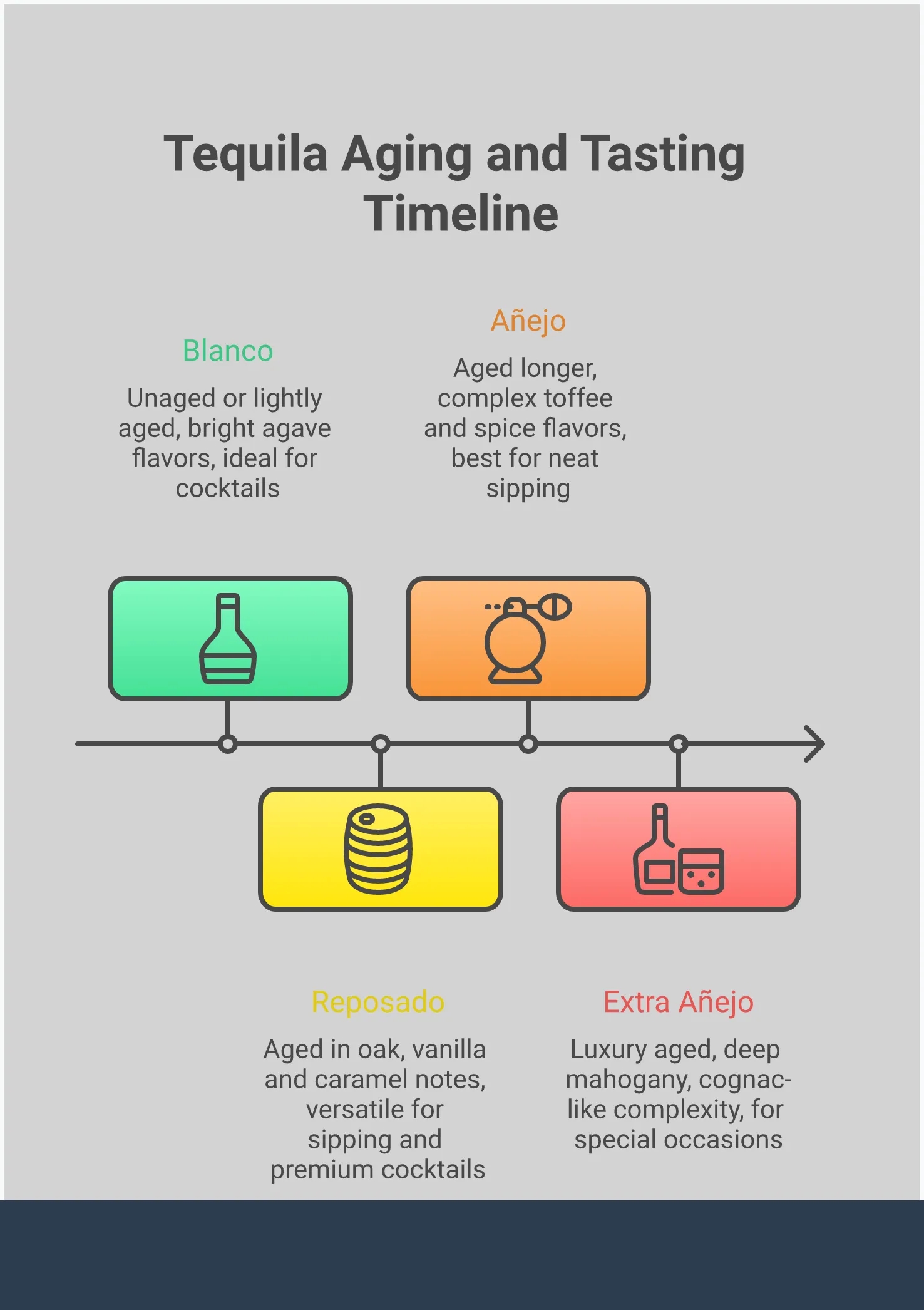
Once you start exploring the world of tequila, you’ll quickly realize it’s not a one-size-fits-all spirit. The incredible diversity in flavor, color, and aroma comes down to one key factor: aging. How long a tequila rests in an oak barrel (or if it rests at all) completely transforms its character. Understanding the five main types of tequila is the first step to finding the perfect bottle for your palate, whether you’re shaking up a classic margarita or looking for a spirit to sip and savor. From the bright, agave-forward notes of a Blanco to the rich complexity of an Extra Añejo, there’s a style for every occasion.
Blanco (or Silver): Crisp and Unaged
Think of Blanco tequila as the purest expression of the blue weber agave plant. Also called silver or plata, this is tequila in its most straightforward form. It’s either bottled right after distillation or aged for a very short time—less than two months—in stainless steel or neutral oak barrels. This minimal contact with wood means it retains the crisp, clean, and peppery flavors of the raw agave. Its bright, vibrant character makes it the go-to for cocktails like the Margarita or Paloma, where you want that classic tequila punch to shine through. If you want to taste the true essence of agave, exploring our collection of tequilas is the perfect place to start.
Reposado: Rested in Oak
Reposado translates to “rested,” which is a perfect description for this style. To earn the name, a tequila must be aged in oak barrels for at least two months but less than a year. This brief time in the barrel is just enough to mellow the spirit’s sharp edges and introduce subtle notes of oak, vanilla, and caramel without overpowering the agave flavor. The result is a smoother, more nuanced tequila with a beautiful pale gold color. A great Reposado is incredibly versatile; it’s smooth enough to sip on its own but still holds up beautifully in cocktails, adding a lovely layer of complexity.
Añejo: Aged and Complex
This is where tequila starts to take on the sophisticated characteristics of other aged spirits. Añejo, meaning “aged,” spends between one and three years in small oak barrels. This extended aging process imparts a rich amber color and a much more complex flavor profile. The bright agave notes take a backseat to warmer flavors of vanilla, caramel, and spice, all wrapped in a smooth, velvety texture. An Añejo is best enjoyed neat or on the rocks, allowing you to appreciate the intricate flavors developed over time. It’s the perfect choice for a whiskey drinker looking to explore the world of premium tequila.
Extra Añejo: Rich and Luxurious
Introduced as an official category in 2006, Extra Añejo is the pinnacle of aged tequila. These spirits are aged for a minimum of three years in oak barrels, resulting in a tequila that is exceptionally rich, smooth, and complex. The color is a deep mahogany, and the flavor profile is layered with notes of dried fruit, chocolate, toasted oak, and sweet spice. An Extra Añejo is a true sipping spirit meant to be savored slowly, much like a fine cognac or a well-aged scotch. Because of the time and craftsmanship involved, these bottles are often a rare find and represent the most luxurious expression of what tequila can be.
Joven (or Gold): A Unique Blend
Joven, which means “young,” is a bit of a wild card in the tequila family. Most often, a Joven is a blend, typically consisting of a Blanco tequila mixed with a small amount of aged tequila (like a Reposado or Añejo). This creates a spirit that has the bright agave notes of a Blanco with a hint of the smoothness and complexity from an aged tequila. However, be mindful of bottles simply labeled "Gold." Some are Joven, but others are "mixto" tequilas where color and flavor additives create the golden hue. A quality Joven offers a balanced profile that works well in a variety of drinks.
What Does Each Tequila Type Taste Like?
Understanding the different types of tequila is the key to finding one you’ll love. The main difference in taste comes down to one simple factor: aging. How long a tequila spends resting in an oak barrel completely transforms its character, taking it from a bright, vibrant spirit to a rich, complex one. The journey from unaged to extra-aged is a fascinating one for your palate, and where the agave is grown plays a big role, too. Let’s get into what you can expect from each glass.
The Bright Agave Notes of Blanco
If you want to taste the purest expression of the blue weber agave, reach for a Blanco. Also known as silver or white tequila, this spirit is either unaged or rested for less than two months in stainless steel or neutral oak barrels. The flavor is crisp, clean, and agave-forward, often with notes of citrus, pepper, and sweet, cooked agave. Because of its bright and punchy character, Blanco is the backbone of countless classic cocktails, from a zesty Margarita to a refreshing Paloma. It’s the perfect introduction to the world of tequila and a must-have for any home bar.
The Smooth, Oaky Flavors of Aged Tequilas
Once tequila spends time in an oak barrel, it begins to take on a whole new personality. Reposado (“rested”) tequila, aged for at least two months, starts to mellow out, balancing the agave’s sweetness with soft notes of oak, vanilla, and caramel. Go a step further with Añejo (“aged”), which rests for at least a year, developing a smoother, richer profile with deeper notes of spice and toffee. For the ultimate sipping experience, Extra Añejo is aged for three years or more, resulting in a dark, incredibly complex spirit with flavors that can rival a fine whiskey. Many of these older expressions are considered rare finds and are best enjoyed neat.
Highland vs. Lowland: How Region Changes the Taste
Just like wine, tequila has terroir—the idea that the land itself shapes the final flavor. Where the blue agave is grown in Jalisco makes a noticeable difference in the bottle. Agave from the highlands, or Los Altos, grows in rich, red clay soil and tends to produce a sweeter, fruitier, and more floral tequila. On the other hand, agave from the lowlands, or El Valle, grows in volcanic soil, which gives the resulting tequila a more earthy, mineral, and herbal flavor profile. Knowing this little detail can help you choose between different spirits and find a bottle that perfectly suits your palate.
Tequila vs. Mezcal: What's the Real Difference?
If you think of all agave spirits as one big family, tequila and mezcal are the two most famous siblings. They share the same DNA—both are made from the agave plant in Mexico—but they have very different personalities. Understanding what sets them apart is the key to finding which one you’ll love. While many people think the only difference is the worm in the bottle (which is mostly a marketing gimmick for certain
It's Not Just the Worm: Agave, Region, and Rules
The first major rule separating these two spirits is the agave itself. True tequila can only be made from one specific variety: the Blue Weber Agave. Mezcal, however, is a bit of a free spirit and can be produced from over 30 different types of agave. This is why you’ll find such a wide spectrum of flavors in the mezcal world. Geography also plays a huge role. Tequila production is restricted to five states in Mexico, with the state of Jalisco being its heartland. This designation of origin is protected by law, ensuring that every bottle meets specific quality and production standards.
The Smoky Flavor: It's All in the Cooking Process
The most distinct flavor difference between tequila and mezcal comes from the cooking process. That signature smokiness you find in mezcal isn't an accident; it's created by roasting the agave hearts (piñas) in underground earthen pits lined with hot rocks. This rustic, traditional method infuses the agave with earthy and smoky notes. Tequila production, on the other hand, generally involves steaming the piñas in either traditional brick ovens or modern stainless-steel autoclaves. This production method results in a cleaner spirit where the bright, sweet, and peppery flavors of the agave plant take center stage.
Why Tequila Is So Important to Mexican Culture
Tequila is so much more than the key ingredient in your favorite margarita. In Mexico, it’s a source of immense national pride, a cornerstone of celebrations, and a spirit deeply connected to the land itself. Its story is a blend of ancient tradition and modern craftsmanship, representing a cultural heritage that has been shared with the world. From the sprawling blue agave fields to the lively toast at a family gathering, tequila is woven into the very fabric of Mexican life, symbolizing history, community, and a unique connection to place that you can taste in every single sip.
A UNESCO World Heritage Treasure
The cultural weight of tequila is so significant that it has earned global recognition. In 2006, the area where blue agave is cultivated for tequila was named a UNESCO World Heritage Site. This designation protects the vast landscapes of blue agave fields and the historic distilleries in Tequila, Jalisco. It acknowledges that the process of making tequila—from farming the agave to distilling the spirit—is a living cultural tradition that has been passed down through generations. This isn't just about protecting a plant; it's about preserving a way of life and honoring the deep historical roots of Mexico's most famous spirit.
The Spirit of Mexican Celebrations
If you attend a wedding, birthday, or national holiday celebration in Mexico, you’ll almost certainly find tequila at the heart of the festivities. It’s the spirit of choice for toasting big moments and enjoying time with loved ones. While many of us know it from cocktails, tequila is often sipped and savored neat to appreciate its complex flavors. Its central role in social gatherings highlights its importance in building community and creating shared memories. A great bottle of tequila isn't just a drink; it's an invitation to connect and celebrate.
A Proud Symbol of National Identity
Tequila is one of Mexico's most important and proudest exports, acting as a liquid ambassador for the country's rich culture. The industry is a vital part of the national economy, with international sales bringing in hundreds of millions of dollars annually. This global demand showcases tequila's role as a proud symbol of Mexican identity and craftsmanship. When you choose a bottle of 100% agave tequila, you are supporting the farmers, distillers, and communities that have perfected this art over centuries. It’s a taste of Mexican heritage that has rightfully earned its place on the world stage.
How to Best Enjoy Your Tequila
Once you’ve found a bottle that speaks to you, the next step is figuring out the best way to drink it. While there’s no single right answer, understanding the different ways to serve and pair tequila can completely change your experience. Whether you’re mixing a cocktail for friends or settling in with a glass after a long day, how you enjoy your tequila depends on its type and, of course, your personal preference. Let’s explore a few ways to get the most out of every drop.
Sipping vs. Shooting: The Right Way to Taste
Many of us were introduced to tequila as a shot, complete with a lick of salt and a lime wedge chaser. While there’s a time and place for that ritual, it often does a disservice to well-made tequila. That method was popularized to mask the harsh bite of lower-quality spirits. For a premium, 100% agave tequila, you’ll want to sip it. Pour a small amount into a glass—a snifter works beautifully—and let it breathe for a moment. Take small sips to appreciate the complex flavors of agave, citrus, vanilla, or oak. You’ll find that good tequila is surprisingly smooth and doesn’t have that aggressive burn you might expect.
Perfect Pairings: What to Eat with Tequila
Tequila is a fantastic companion to food, and its pairing potential goes far beyond tacos and guacamole. The key is to match the intensity of the tequila with the food. A crisp Blanco pairs wonderfully with bright, fresh flavors like ceviche, grilled fish, and citrusy salads. Its clean profile cuts through richness without overpowering the dish. For an aged Reposado or Añejo, think richer. The oaky, caramel notes are a great match for grilled meats, mole sauces, and even dark chocolate. You can also create a simple tasting board with fresh orange slices, cinnamon, and a selection of mild cheeses to highlight the spirit’s character.
Choosing the Right Tequila for Cocktails or Sipping
The versatility of tequila is one of its greatest strengths, but not every type is suited for every purpose. As a general rule, the younger the tequila, the better it is for mixing. A Blanco is the go-to for cocktails like the Margarita or Paloma because its bright, peppery agave flavor stands up to citrus and other mixers. A Reposado offers a great middle ground; its subtle oakiness adds complexity to cocktails but is also smooth enough to sip. Once you get to Añejo and Extra Añejo, you’re in sipping territory. These spirits are aged to develop deep, rich flavors similar to a fine brandy or whiskey, and they’re best enjoyed neat or with a single large ice cube.
How to Choose a Great Bottle of Tequila
Navigating the world of tequila can feel like a big undertaking, but a few key pieces of information will help you select a fantastic bottle every time. Instead of grabbing the one with the flashiest label, you can learn to read the story it’s telling. By understanding what to look for, you can find a high-quality tequila that fits your taste and budget, whether you’re mixing a cocktail or looking for a spirit to sip and savor.
Decoding the Label: What to Look For
The tequila label is your best friend in the liquor aisle. Your first mission is to find the NOM, or Norma Oficial Mexicana. Every bottle of authentic tequila has a four-digit NOM number that tells you exactly which distillery it came from. This is your guarantee of quality and adherence to production standards. If you find a tequila you love, you can look up its NOM to discover other brands made at the same facility, which is a great way to find new favorites with a similar character. Think of it as a seal of approval that connects you directly to the spirit's source.
Why "100% de Agave" Is a Must
If you only remember one thing, make it this: always look for "100% de Agave" on the label. This phrase guarantees that the spirit was made using only the sugars from the Blue Weber agave plant. The alternative is a "mixto" tequila, which legally only needs to be 51% agave, with the rest of the sugars coming from other sources like corn or cane syrup. This difference is night and day in terms of flavor, aroma, and quality. For the purest expression of agave—those bright, earthy, and complex notes—choosing 100% de Agave ensures you’re getting the real deal.
What the Price Tag Really Tells You
A higher price doesn't automatically equal better tequila, but it does give you clues about what’s inside the bottle. The cost is often tied to the aging process; an unaged Blanco will naturally be more affordable than a complex Extra Añejo that has spent years resting in a barrel. Price can also reflect production methods, the quality of the agave, and the brand's heritage. Many drinkers today seek spirits with a sense of place and authenticity, and that craftsmanship often comes at a premium. The good news is that you can find fantastic, well-made tequilas at every price point. It’s all about understanding what you’re paying for.
Related Articles
Frequently Asked Questions
What does "100% de Agave" on a label actually mean? This is the most important phrase to look for when buying tequila. It guarantees that the spirit in the bottle was made using only the sugars from the Blue Weber agave plant. If you don't see this on the label, you're likely looking at a "mixto" tequila, which can contain up to 49% other sugars, like from corn or cane. For the authentic, clean taste of tequila, always choose a bottle that is clearly marked "100% de Agave."
Is an older, more expensive tequila always better? Not at all. "Better" really comes down to your personal taste and how you plan to enjoy it. An unaged Blanco offers the purest, most vibrant expression of the agave plant and is fantastic for cocktails. An aged Añejo or Extra Añejo is a complex sipping spirit meant to be savored like a fine whiskey. One isn't inherently superior to the other; they just offer completely different experiences.
So, is mezcal just a smoky type of tequila? While they are related, they are two distinct spirits. Think of it this way: all tequila is technically a type of mezcal, but not all mezcal is tequila. Tequila must be made from only Blue Weber agave in specific regions of Mexico. Mezcal can be made from dozens of different agave varieties. That signature smokiness in mezcal comes from roasting the agave hearts in underground pits, while tequila's agave is typically steamed or baked in ovens, resulting in a cleaner flavor profile.
What's the deal with the worm in the bottle? You will never find a worm in a bottle of authentic tequila. That's a marketing gimmick that became associated with certain brands of mezcal decades ago. It was never a traditional practice and is not a sign of quality or authenticity in any agave spirit. If you see one, it's best to choose a different bottle.
I'm new to tequila. What's a good type to start with? A great place to begin is with a high-quality Blanco. Because it's unaged, it will give you a true sense of the agave's bright, peppery, and citrusy flavors, and it's the perfect base for a classic margarita. If you prefer something a bit smoother for sipping, try a Reposado. Its short time resting in oak barrels softens the spirit and adds gentle notes of vanilla and caramel, making it very approachable.