


What is Scotch? A Simple Guide to This Classic Spirit

Let’s clear something up: Scotch isn’t just one flavor. Many people think of it as intensely smoky and only for a certain type of drinker, but that couldn't be further from the truth. The real answer to what is Scotch is that it’s an incredibly diverse category of whisky with a style for nearly every palate. You can find Scotches that are light, floral, and fruity, others that are rich, sweet, and spicy, and yes, some that are powerfully peaty and bold. This guide is designed to broaden your perspective, taking you on a tour of Scotland's different whisky regions to showcase the amazing variety this spirit has to offer. Forget the stereotypes and get ready to discover your new favorite.
Key Takeaways
- Strict rules define authentic Scotch: To earn its name, the whisky must be made entirely in Scotland and aged in oak for at least three years. This guarantees a standard of quality and tradition in every bottle.
- Use the regions as your flavor map: Scotland's five whisky regions each have a signature style. Knowing whether you prefer the elegant, fruity notes of Speyside or the bold, smoky character of Islay will help you choose a bottle you'll love.
- Simple serving techniques make a big difference: You can enhance any Scotch by serving it at room temperature in a tulip-shaped glass. Adding a few drops of water can also soften the alcohol and reveal more subtle flavors.
What Exactly Is Scotch Whisky?
Before we get into the different types and tastes, let's start with the basics. At its heart, Scotch is a type of whisky that can only be made in Scotland. It’s not just a style; it’s a legally protected spirit with a rich history and a strict set of rules that distillers must follow. Think of it like Champagne—if it’s not from Champagne, France, it’s just sparkling wine. The same principle applies here. This dedication to tradition and place is what gives Scotch its distinct character and global reputation. Every bottle tells a story of the land, the water, and the people who made it.
The Story and Rules Behind the Name
The word "whisky" itself comes from a Gaelic phrase meaning "water of life," which tells you just how essential this spirit has been to Scottish culture for centuries. Its history is full of drama, including a 1644 tax that drove distillers underground to make their whisky in secret. It wasn't until the Excise Act of 1823 that legal distilling became more common, paving the way for the industry we know today. To protect this legacy, the Scotch Whisky Regulations of 2009 set firm rules: it must be made in Scotland from water and malted barley, aged in oak barrels for at least three years, and have an alcohol content of at least 40%.
Why It Must Come From Scotland
The "Scotch" in Scotch whisky is non-negotiable. Every step of the process, from mashing the grains to maturing the spirit, must happen within Scotland's borders. This geographical requirement is the most important rule of all. The law also dictates the core ingredients—malted barley, water, and yeast, though other whole grains are allowed for certain types. Even the distillation strength is regulated to ensure the final product retains the character of its raw materials. These strict standards ensure that every bottle of Scotch is a genuine expression of its Scottish heritage, setting it apart from other spirits around the world.
Getting to Know the 5 Types of Scotch
To really appreciate Scotch, it helps to know what you’re drinking. The world of Scotch whisky is organized into five distinct categories, each defined by Scottish law. Understanding these types will help you read a label like a pro and find the perfect bottle for your palate, whether you're just starting your collection or looking for a new favorite. Each category offers a different experience, from the hyper-focused character of a single malt to the balanced harmony of a blend.
Single Malt Scotch
Think of Single Malt as the purest expression of a single distillery’s character. To earn this title, the whisky must be made at one specific distillery using only malted barley and distilled in traditional copper pot stills. This process results in a spirit with rich, complex flavors that reflect the unique environment and production style of its home. From the smoky notes of an Islay malt to the fruity elegance of a Speyside, exploring single malts is like taking a flavor tour of Scotland. It’s a fantastic way to discover the nuances that make each distillery special and find a profile that speaks to you.
Single Grain Scotch
Don’t let the name fool you—Single Grain Scotch isn’t made from just one type of grain. The "single" refers to the fact that it’s produced at a single distillery. Unlike single malts, it can be made from a mix of grains, including corn, wheat, and malted barley. It's typically distilled in a modern column still, which creates a lighter, smoother, and often more approachable spirit. While single grain whiskies are essential to the character of blended Scotches, they are also wonderful to enjoy on their own for their gentle sweetness and clean finish. They offer a softer introduction to the world of Scotch.
Blended Malt Scotch
If a single malt is a solo artist, a blended malt is a supergroup. This category consists of a carefully crafted mix of two or more single malt whiskies from different distilleries. There is no grain whisky involved here—it’s all malt. The goal of the master blender is to create a harmonious and balanced flavor profile that showcases the best qualities of each component whisky. The result is a complex and layered spirit that offers a unique tasting experience, combining different regional characteristics into one seamless dram. It’s a testament to the art of blending.
Blended Grain Scotch
Following the same logic, a Blended Grain Scotch is a marriage of two or more single grain whiskies from different distilleries. This is a less common category, but it’s one worth exploring for its exceptionally smooth and easy-drinking nature. By combining various grain whiskies, blenders can create a spirit that is exceptionally smooth, light, and often subtly sweet with notes of vanilla and caramel. It’s a great choice for those who prefer a milder flavor profile or are looking for a versatile whisky that shines in cocktails without overpowering other ingredients.
Blended Scotch Whisky
This is the most popular and widely available type of Scotch in the world, accounting for the vast majority of sales. A Blended Scotch is a mix of one or more single malt whiskies and one or more single grain whiskies. The malts provide depth, character, and complexity, while the grains add smoothness and consistency. This masterful combination allows blenders to create a wide spectrum of flavors, from light and floral to rich and smoky. This versatility is what makes blended Scotch so appealing to a broad range of tastes and a dependable choice for any occasion.
The Rules That Make Scotch, Scotch
Not just any whisky can call itself Scotch. The name is protected by law, and for good reason—it guarantees a certain level of quality and heritage. Think of it less as a recipe and more as a set of time-honored rules that every distiller in Scotland must follow. These regulations ensure that the spirit you’re sipping is authentic, from its simple ingredients to the cask it was aged in. This commitment to tradition is what gives Scotch its distinguished reputation around the world.
So, what exactly are these rules? They cover everything from the raw materials to the minimum time spent in a barrel. Understanding them is the first step to truly appreciating the craftsmanship that goes into every bottle. Let’s break down the three main pillars that define what makes a whisky a true Scotch.
The Official Ingredient List
At its heart, Scotch has a beautifully simple ingredient list. To be called a single malt Scotch, the spirit must be made from just two things: water and malted barley. That’s it. The "malting" part simply means the barley grains are allowed to germinate before being dried, a process that unlocks the sugars needed for fermentation.
For grain whiskies, the rules allow for the inclusion of other whole cereal grains, like corn or wheat, in addition to the malted barley. But no matter the type, there are no shortcuts. No flavorings or additives are permitted, except for a bit of caramel coloring to ensure consistency. This strict adherence to natural ingredients is what allows the true character of the grain and the cask to shine through.
How Long It Must Age
Patience is a key ingredient in any good Scotch. By law, the spirit must be aged in oak casks for a minimum of three years. This isn't just an arbitrary waiting period; it's during this time that the magic really happens. The raw, fiery spirit mellows out, absorbing color, aroma, and complex flavors from the wood. The type of oak cask used—whether it previously held bourbon, sherry, or wine—plays a huge role in shaping the final taste profile.
While three years is the minimum, many of the most celebrated Scotches are aged for much longer, often for 12, 18, or even 25 years. Generally, the longer a whisky matures, the smoother and more nuanced it becomes, making some of these older bottles truly rare finds.
Why Production Location Is Key
This might be the most straightforward rule of all: to be called Scotch, a whisky must be produced, from start to finish, in Scotland. The entire process, from mashing the grains and fermentation to distillation and maturation, has to take place within the country's borders. This geographical requirement is non-negotiable and is what ties the spirit so deeply to its homeland.
This rule protects the identity and integrity of Scotch as one of the world's most iconic spirits. The unique Scottish environment, from its soft water sources to its cool, damp climate, contributes to the distinct character of the whisky. Furthermore, the specific traditions and techniques passed down through generations in Scotland’s different whisky regions are what create the incredible diversity of styles we get to enjoy today.
From Grain to Glass: How Scotch Is Made
Ever wonder how a few simple ingredients—water, barley, and yeast—transform into the complex spirit in your glass? The process is a blend of science and tradition, refined over centuries. Every bottle of Scotch tells a story that begins in the fields of Scotland and ends with a carefully crafted liquid. It all comes down to four key stages: malting, mashing and fermenting, distillation, and maturation. Let's walk through each step to see how this iconic spirit is made.
Step 1: Malting the Barley
The journey begins with barley. The grains are steeped in water for a few days to trick them into germinating, or sprouting. This step is crucial because it activates natural enzymes inside the grain that will later convert starches into fermentable sugars. Just as the barley starts to sprout, the process is stopped by drying it in a large kiln. For many distilleries, especially on the island of Islay, the kiln is fired with peat. This dense, earthy fuel imparts a smoky, medicinal flavor to the barley, which carries all the way through to the final whisky.
Step 2: Mashing and Fermenting
Once the malted barley is dry, it’s ground into a coarse flour called grist. The grist is mixed with hot water in a large vessel called a mash tun. This creates a sugary, porridge-like mixture. The hot water helps those enzymes get to work, converting the barley’s starches into a sweet liquid known as "wort." The wort is then drained off, cooled, and moved into fermentation tanks. Here, yeast is added, and it begins feasting on the sugars, producing alcohol and carbon dioxide. After a few days, this creates a liquid that’s essentially a strong, malty beer, called the "wash."
Step 3: The Distillation Process
To turn the beer-like wash into a high-proof spirit, it needs to be distilled. The wash is heated in large copper stills. Because alcohol boils at a lower temperature than water, it evaporates first. This alcohol vapor rises to the top of the still, where it’s channeled into a condenser and cooled, turning it back into a liquid. Single malt Scotch is legally required to be distilled at least twice in traditional copper pot stills, a method that refines the spirit and helps shape its final character. This process separates the alcohol from the water, concentrating its strength and flavor.
Step 4: Maturing in Oak Casks
The clear, potent liquid that comes off the still is not yet Scotch. To earn that title, the new-make spirit must be aged in oak casks in Scotland for a minimum of three years. This is where the magic really happens. The spirit interacts with the wood, gaining all of its color and a significant portion of its flavor. The type of cask used—often American oak barrels that previously held bourbon or European oak casks that held sherry—plays a huge role in the final taste profile. Over time, the whisky softens and develops complex notes of vanilla, spice, fruit, and caramel. Many of the most prized rare whiskies spend decades in these casks, developing incredible depth and character.
A Tour of Scotland's Whisky Regions
Just like a wine’s flavor is shaped by its terroir, a Scotch whisky’s character is deeply connected to where it was made. Scotland is divided into five distinct whisky-producing regions, each with its own style and signature tasting notes. Getting to know these regions is one of the best ways to find a whisky you’ll love. Whether you prefer something light and floral or bold and smoky, there’s a corner of Scotland with a dram that’s perfect for you. Let's take a quick trip through the country's most famous whisky landscapes.
Speyside: Fruity and Elegant
Speyside is the heart of Scotch production, home to more than half of Scotland's distilleries. If you've ever enjoyed a glass of The Macallan or Glenfiddich, you've tasted a Speyside whisky. These spirits are famous for their elegance and complexity, often showcasing notes of apple, pear, honey, and vanilla. While they can range from light and grassy to rich and sherry-sweet, they are typically less peated than their coastal cousins. This approachable, often fruity profile makes Speyside single malts a fantastic starting point for anyone new to Scotch.
Islay: Smoky and Peaty
Welcome to the home of peat. Islay (pronounced "eye-luh") whiskies are not for the faint of heart. This small island on the west coast is known for producing some of the most intensely smoky and powerful whiskies in the world. The flavor comes from peat, a type of turf burned to dry the barley, which imparts bold, medicinal notes of smoke, brine, and iodine. Distilleries like Laphroaig and Ardbeg are icons of this style. If you love strong, savory flavors and want a whisky that makes a statement, Islay is your region.
Highlands: Diverse and Robust
The Highlands is the largest whisky region by area, and its sheer size means there’s no single Highland style. Instead, you’ll find an incredible diversity of flavors. Whiskies from the northern Highlands can be rich and full-bodied, while those from the south are often lighter and fruitier. Common tasting notes include heather, honey, and a gentle, heathery smoke that’s much milder than what you’d find in Islay. This variety makes the Highlands a fun and rewarding region to explore, with distilleries like Glenmorangie and Dalmore offering classic examples of its robust character.
Lowlands: Light and Smooth
Often called the "Lowland Ladies" for their delicate and gentle nature, whiskies from this region are known for being smooth, light, and floral. The secret is often triple distillation, a process that strips out heavier compounds and results in a softer spirit. Expect notes of grass, honeysuckle, cream, and citrus. Lowland malts are typically unpeated, making them incredibly accessible and perfect for an aperitif or for someone who finds other Scotches too intense. It’s a style that’s all about subtlety and grace.
Campbeltown: Rich and Unique
Once the whisky capital of the world with over 30 distilleries, Campbeltown is now home to just a handful. But what it lacks in quantity, it makes up for in character. This small coastal region produces whiskies with a truly unique profile that’s hard to pin down. You’ll often find a combination of sea salt and brine, a touch of smoke, and a rich sweetness with notes of fruit, toffee, and vanilla. These complex and distinctive drams are highly sought after by enthusiasts, making them some of the most interesting rare finds in the whisky world.
Scotch vs. The World: What's the Difference?
While Scotch holds a special place in the world of spirits, it's just one member of the larger whiskey family. Understanding what sets it apart from its famous cousins, like bourbon and Irish whiskey, can help you appreciate its unique character even more. Let's look at the key distinctions that give each spirit its signature style.
Scotch vs. Bourbon
Think of Scotch and bourbon as two distinct cousins with different upbringings. Scotch is exclusively from Scotland and must be made from malted barley. Bourbon, on the other hand, is a classic American spirit, primarily from Kentucky, and its mash bill must contain at least 51% corn. This single ingredient difference creates their signature flavors. Bourbon’s corn base gives it a sweeter profile with notes of vanilla and caramel. Scotch offers a wider, more complex range of tastes, from fruity and floral to smoky and savory, especially when peat is used in the malting process. Their aging processes also differ: bourbon must mature in new, charred oak barrels, while Scotch ages in oak casks that are often reused.
Scotch vs. Irish Whiskey
Scotch and Irish whiskey are neighbors with their own unique traditions. The most significant difference is in the distillation process. Irish whiskey is famously triple-distilled, which produces an exceptionally smooth and light-bodied spirit. Scotch is typically distilled only twice, resulting in a more robust and full-flavored character. Their core ingredients also vary slightly. While Scotch is made from malted barley, Irish whiskey often includes a mix of both malted and unmalted barley in its mash. This combination contributes to that signature smoothness Irish whiskey is known for. So, if you’re looking for something exceptionally smooth, you might lean toward an Irish whiskey, but if you want complexity and body, Scotch is an excellent choice.
Key Differences in How They're Made
To be called Scotch, a whisky must follow a strict set of rules laid out by law. These regulations ensure every bottle meets a high standard of quality and tradition. First, it must be produced entirely in Scotland using only water and malted barley (other whole grains are allowed in grain whiskies). It must also be aged in oak casks for a minimum of three years and bottled at no less than 40% alcohol by volume. The only additives permitted are water and plain caramel coloring for consistency. This meticulous process is what makes Scotch one of the most respected spirits in the world, guaranteeing that the flavor comes purely from the ingredients, distillation, and maturation.
How to Properly Taste and Serve Scotch
To truly appreciate the complex character of a good Scotch, how you drink it matters. You don't need to be a seasoned expert to get the most out of your dram. A few simple techniques for tasting and serving can completely transform your experience, helping you pick up on the subtle notes and craftsmanship in every bottle. Let's walk through the best way to pour, smell, and sip your Scotch.
Choosing the Right Glass
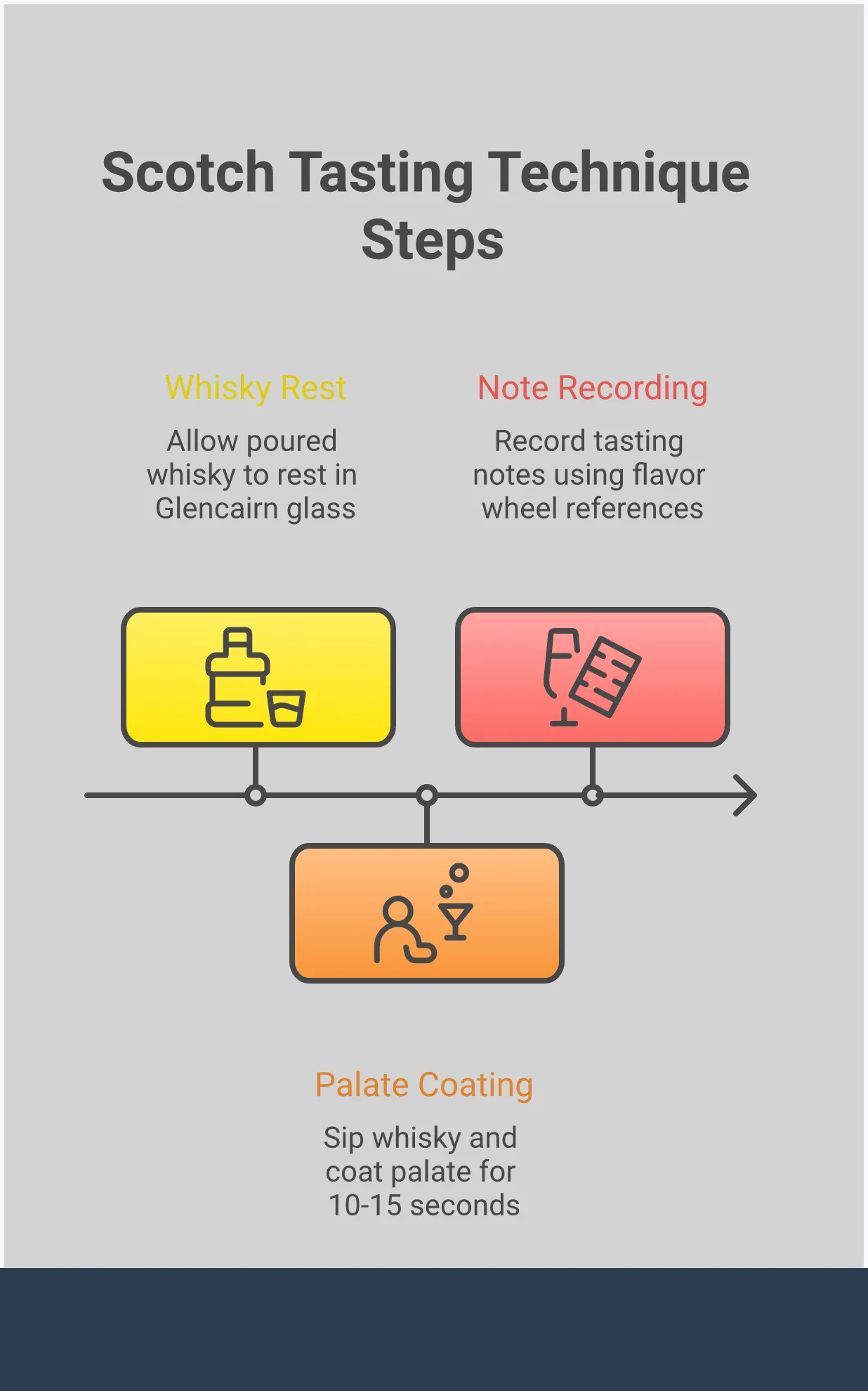
Before you even pour, let's talk about glassware. While a classic rocks glass is fine for a simple mixed drink, it doesn't do much for appreciating a neat Scotch. The wide opening lets all those wonderful aromas escape before they reach your nose. Instead, opt for a tulip-shaped glass, like a Glencairn or a copita. The curved bowl concentrates the aromatic compounds, and the narrow rim directs them right where you can smell them best. This simple switch makes a huge difference in how you perceive the flavors of the whisky you're about to enjoy.
The Art of Nosing and Tasting
The first step to tasting is actually smelling, or "nosing." Give the glass a gentle swirl to agitate the liquid slightly, then bring it to your nose and take a soft sniff. This prepares your senses for what's to come. When you're ready to taste, take a small sip and let it rest on your tongue, coating your entire mouth. Notice the initial flavors, the texture, and the finish—the taste that lingers after you swallow. Don't be afraid to add a few drops of room-temperature water. This can "open up" the Scotch, softening the alcohol burn and revealing more delicate, hidden notes.
Serving Temperature and Presentation Tips
Scotch is at its best when served at room temperature. This allows its full spectrum of flavors and aromas to shine without being muted by cold. If you prefer your drink chilled, consider using a single large ice cube or sphere. It will melt more slowly than smaller cubes, chilling the spirit with minimal dilution. Ultimately, how you drink your Scotch is a matter of personal preference. Serving it in a proper glass alongside some simple food pairings, like dark chocolate or cheese, can also turn a simple drink into a memorable tasting session for any rare find you're opening.
Your First Bottle: A Beginner's Buying Guide
Walking into the Scotch aisle for the first time can feel a bit overwhelming, but finding your perfect bottle is easier than you think. It’s all about knowing what to look for and starting with flavors that are easy to enjoy. Think of this as your personal cheat sheet to confidently pick out a bottle you’ll love, whether you’re buying for yourself or as a gift. Let’s break down the label, talk about price, and give you a few solid recommendations to get you started.
How to Read a Scotch Label
The label on a bottle of Scotch is like its biography—it tells you everything you need to know. First, look for the distillery name, which is the producer. You'll also see if it's a "single malt" or a "blended" whisky, which tells you about its origin. One of the most important things is the age statement. If you see a number like "12 Years Old," it means the youngest whisky in that bottle has aged in a cask for at least 12 years. If there’s no age statement, don’t worry—by law, it still has to be at least three years old. Understanding these basics will help you browse our whisk(e)y selection with confidence.
Finding Great Value at Any Price Point
Scotch has a reputation for being expensive, and while some rare bottles certainly are, there are fantastic options at every price. Single malts often cost more because they come from one distillery and follow very strict production rules. Blended Scotches, which combine whiskies from multiple distilleries, can be more affordable and are a great way to start your journey. Don't assume a higher price tag always means better quality for your palate. You can find some truly wonderful and budget-friendly bottles in our collection of gifts under $100, proving that a great drinking experience doesn’t have to break the bank.
Our Top Scotch Picks for Newcomers
When you're just starting, it's best to go with something classic and approachable. For a smooth introduction to single malts, try The Glenlivet. It’s known for its light, fruity, and easy-drinking character. If you want to explore the world of blends, Johnnie Walker Black Label is an excellent choice. It’s perfectly balanced with hints of smoke, fruit, and vanilla, making it incredibly versatile for sipping neat or in a simple cocktail. Both are fantastic starting points that showcase what makes Scotch so special. You can find these and other great beginner-friendly spirits right here.
Frequently Asked Questions
What does the age statement on a bottle of Scotch actually mean? The number on the bottle, like "12 Years Old," tells you the age of the youngest whisky used in that specific blend or bottling. So, if you have a 12-year-old single malt, every drop inside has spent at least 12 years maturing in an oak cask. For a blended Scotch, it means the youngest component, whether it's a malt or grain whisky, is at least that old, while other whiskies in the mix could be much older.
I keep hearing about "peaty" Scotch. What does that mean? Peat is essentially decomposed plant matter that has been compressed in the ground for thousands of years. In Scotland, particularly on the island of Islay, it's traditionally used as a fuel source to dry the malted barley. When the peat burns, it releases a very aromatic smoke that infuses the barley, giving the final whisky a distinctive smoky, earthy, and sometimes medicinal flavor. It's a bold taste that isn't for everyone, but those who love it are incredibly passionate about it.
Is older Scotch always better? Not necessarily. While age can add smoothness, depth, and complexity, it doesn't automatically guarantee a "better" whisky. Taste is completely subjective. An older whisky might develop more oak-driven notes of leather and spice, which some people love. However, a younger whisky often has a more vibrant, spirit-forward character that showcases the distillery's unique style. It's more about finding the age and flavor profile that you personally enjoy the most.
Can I use a good single malt in a cocktail? Absolutely! While many people prefer to sip their single malts neat to appreciate their complexity, there's no rule that says you can't use them in a cocktail. A well-made cocktail can actually highlight different notes in the whisky. The key is to use simple recipes, like an Old Fashioned or a Rob Roy, that complement the spirit rather than mask its flavor. A robust, flavorful single malt can create a truly exceptional drink.
Why is Scotch spelled "whisky" without an "e"? The spelling difference is a great way to remember where a spirit comes from. Traditionally, spirits from Scotland, Canada, and Japan are spelled "whisky." Spirits from the United States and Ireland typically use the "whiskey" spelling. It's a small detail rooted in history and translation from Gaelic, but it's a handy trick for identifying a spirit's origin at a glance.