


What Is Rum? The Ultimate Guide to the Spirit

If you think rum is just a sweet spirit destined for a life with cola or pineapple juice, it’s time for a reintroduction. Rum’s reputation has been shaped by stories of sailors and tiki bars, but its true identity is far more sophisticated and varied. It’s a spirit that can be as elegant and complex as any top-shelf whiskey or cognac. So, what is rum beyond the common clichés? It’s a global spirit crafted with incredible care, offering a vast range of flavors that depend on where and how it’s made. This guide is here to debunk the myths and show you the true character of this versatile spirit, from crisp, dry white rums to deeply aged, contemplative sippers.
Key Takeaways
- Understand the source to find your flavor: A rum's taste starts with its base ingredient. Those made from fresh sugarcane juice are often grassy and earthy, while molasses-based rums provide a richer, sweeter foundation.
- Look beyond the color: A rum's shade isn't a reliable sign of its age or quality, as some producers add coloring. Instead, focus on its style—light, gold, or dark—to get a better idea of its flavor profile.
- Choose your rum for the occasion: Use light rums for crisp, refreshing cocktails like a Mojito, gold rums for drinks with more character like a Mai Tai, and premium aged dark rums for sipping neat.
What Exactly Is Rum?
Before we get into the different styles and cocktails, let's start with the basics. At its heart, rum is a spirit with a story that begins in a field of sugarcane. Understanding its simple origins is the first step to appreciating the incredible diversity you'll find in every bottle, from light and crisp mixers to complex, dark sippers. It’s a spirit defined by its raw material, offering a spectrum of flavors that reflect its tropical heritage.
The Core Ingredients
So, what is rum made of? The answer is simple: sugarcane. Every single bottle of rum begins its life as this tall, sweet grass. Distillers can use a few different forms of it. Some use fresh-pressed sugarcane juice, which often results in a grassier, more vegetal flavor profile. Others use sugarcane syrup. The most common base, however, is molasses—the thick, dark, sweet byproduct of sugar production. This choice of base ingredient is the first major decision a distiller makes, and it sets the stage for the final character of the spirit.
A Glimpse into How It's Made
Once the sugarcane base is chosen, yeast is added to start fermentation. This process creates a liquid called a "wash," which contains the alcohol. Next comes distillation, where the wash is heated to separate and concentrate the alcohol. Distillers use either pot stills, which create richer, more flavorful rums, or column stills for a lighter, cleaner spirit. Many rums are then aged in wooden barrels—often ones previously used for bourbon—for at least a year. Because rum is typically aged in warm climates, it matures much faster than other spirits, losing about 10% of its volume to evaporation each year. This loss is poetically known as the "angel's share."
The Journey from Sugarcane to Spirit
Ever wonder how a stalk of sugarcane transforms into the complex spirit in your glass? The process is a fascinating blend of agriculture, science, and artistry. While every distillery has its unique methods, the fundamental journey from field to bottle follows three key stages: fermentation, distillation, and aging. Understanding this process not only deepens your appreciation for rum but also helps you identify the styles you'll enjoy most. Let's walk through how this beloved spirit is made.
Harvesting and Fermenting
It all begins with sugarcane. Rum production starts with either fresh sugarcane juice, a rich syrup, or molasses—the dark, sweet byproduct of sugar manufacturing. To kickstart the transformation, producers add yeast to this sugary base. The yeast gets to work, consuming the sugars and converting them into alcohol. This process, called fermentation, creates a liquid known as a "wash," which is essentially a low-alcohol sugarcane wine. The type of yeast used and the length of fermentation are crucial, as they begin to develop the foundational flavors of the final spirit.
Distillation: Refining the Spirit
Once fermentation is complete, the wash is ready for distillation. This is the step where the alcohol is separated and concentrated. The fermented liquid is heated in a still, and because alcohol has a lower boiling point than water, it turns into vapor first. This vapor is captured and cooled, condensing back into a much stronger liquid spirit. Distillers typically use one of two types of stills: traditional copper pot stills, which produce richer, more flavorful rums, or modern column stills, which create a lighter, cleaner spirit. The choice of still plays a massive role in defining a rum's character.
The Art of Aging and Maturation
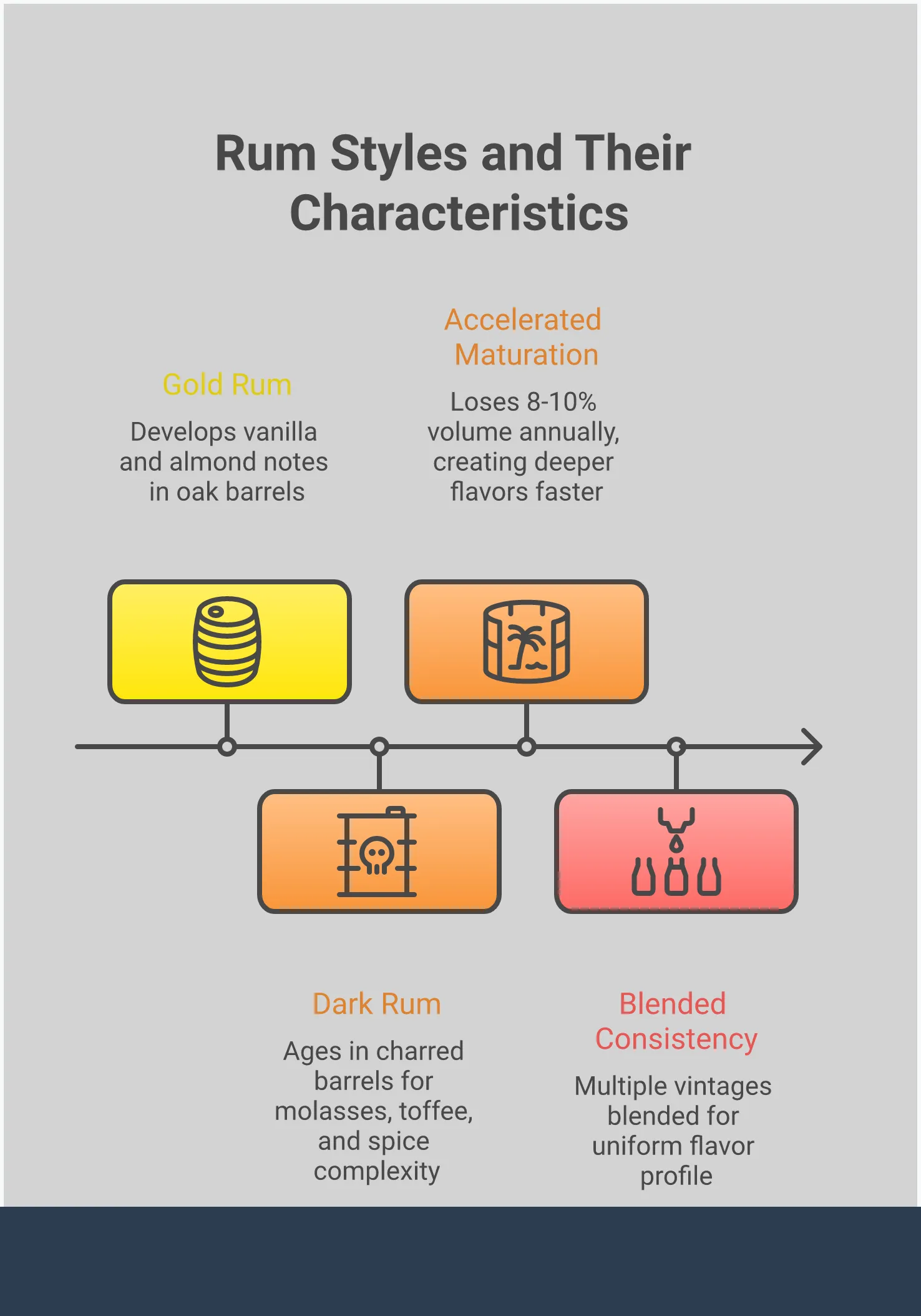
After distillation, many rums are aged to develop deeper, more complex flavors. This maturation process usually takes place in wooden barrels, often ones that previously held bourbon. In the warm climates of the Caribbean, rum ages much faster than spirits like whiskey do in cooler regions. Distillers lose about 10% of the spirit each year to evaporation—a loss poetically known as the "angels' share." After aging, master blenders often mix rums from different barrels and of various ages to create a final product with a consistent and balanced taste, a true hallmark of quality in the world of premium spirits.
Exploring the Different Types of Rum
One of the best things about rum is its incredible diversity. Unlike some spirits with strict production rules, rum is made all over the world in a variety of styles. From light and crisp to dark and complex, there’s a bottle out there for every palate and every occasion. Getting to know the main categories is the first step to finding your perfect match. Let’s walk through the different types you’ll find on the shelf.
Light Rum (White/Silver)
Often called white or silver rum, this is the most delicate style. It’s typically unaged or aged for a short time and then filtered to remove any color, resulting in a clean, crisp, and light-bodied spirit. With subtle notes of sugarcane and a hint of sweetness, light rum is the ultimate team player in cocktails. It mixes beautifully without overpowering other ingredients, making it the go-to for classics like the Mojito, Daiquiri, and Piña Colada. If you’re looking for a versatile bottle to stock your home bar, a quality light rum is an essential starting point for countless refreshing drinks.
Gold Rum (Amber)
Gold rum, also known as amber rum, gets its beautiful color from spending time in wooden barrels, usually oak. This aging process mellows the spirit and imparts richer flavors like vanilla, almond, and caramel. It strikes a perfect balance between the lightness of a white rum and the intensity of a dark one. While some producers add caramel coloring to achieve the hue, a true gold rum’s character comes from the cask. It’s smooth enough to sip on its own but also adds wonderful depth to cocktails like the Mai Tai or a classic Rum Punch. This style is a fantastic next step for anyone looking to explore more complex spirits.
Dark Rum (Black)
Dark rum is the boldest and most flavorful of the bunch. It’s aged for an extended period in heavily charred barrels, which gives it a deep, dark color and a rich, complex profile. Expect powerful notes of molasses, toffee, baked fruit, and warm spices. Some dark rums, often called black rums, also have caramel added for extra color and richness. This is a fantastic sipping rum, perfect for enjoying neat or with a single large ice cube to slowly unfold its flavors. It’s also the essential ingredient in iconic drinks like the Dark 'n' Stormy and adds a robust backbone to many tiki cocktails. It's a must-try for any whiskey lover.
Spiced and Flavored Rum
If you enjoy a little extra character in your glass, spiced and flavored rums are for you. These are typically gold rums that have been infused with a variety of spices like cinnamon, vanilla, nutmeg, and clove, or blended with natural fruit flavors like coconut, pineapple, or mango. The result is a spirit that’s packed with personality and incredibly easy to drink. They are perfect for simple mixed drinks—just add cola or ginger ale for an instant classic. Spiced and flavored rums also provide a creative shortcut for crafting unique cocktails, adding a layer of complexity without needing extra liqueur or syrups.
Overproof Rum
Handle this one with care! Overproof rum is exactly what it sounds like: a rum with a much higher alcohol content than the standard 40% ABV (80 proof), often reaching 75% ABV or more. It’s intensely flavorful and packs a serious punch. While not typically meant for sipping straight, it’s a key ingredient in the world of tiki cocktails, where a small amount (or a float on top) adds a potent kick and aromatic flair. It’s also used in baking and cooking, especially for flambéing dishes. Think of it as a powerful seasoning for your drinks—a little goes a very long way. For a more standard-strength drink, you might prefer pre-mixed Ready-To-Drink Cocktails.
Rhum Agricole
Rhum Agricole is a special style of rum with a protected designation, primarily from the French Caribbean islands like Martinique. Unlike most rums, which are made from molasses, Rhum Agricole is distilled directly from fresh-pressed sugarcane juice. This gives it a completely different flavor profile—one that’s grassy, earthy, and vibrantly funky. It’s a true expression of its terroir, meaning you can taste the character of the land where the sugarcane was grown. It’s often enjoyed neat to appreciate its unique qualities, but it also makes an incredible Ti' Punch, the signature cocktail of Martinique. It's a truly unique spirit that you might find in our collection of rare & hard to find bottles.
A Brief History of Rum
Few spirits have a history as dramatic and influential as rum. Its story is woven into tales of exploration, rebellion, and trade, shaping economies and cultures across the globe. Understanding where rum comes from gives you a deeper appreciation for the complex spirit in your glass, connecting every sip to a rich and turbulent past. From the sugarcane fields of the Caribbean to the decks of naval warships, rum’s journey is a fascinating one.
Its Caribbean Roots
While fermented sugarcane drinks existed for centuries, the spirit we recognize as modern rum was born in the 17th-century Caribbean. On the sprawling sugar plantations of islands like Barbados, enslaved workers discovered that molasses—a thick, syrupy byproduct of sugar production—could be fermented and distilled into a potent spirit. This innovation marked the beginning of rum production in the Americas. The spirit quickly became a local staple and a valuable commodity, laying the foundation for an industry that would soon spread across the globe and define the entire region.
Rum's Role on the High Seas
Rum’s connection to the sea is legendary, thanks in large part to the British Royal Navy. Starting in 1655, sailors were given a daily ration of rum, known as a "tot," which became an integral part of naval life for over 300 years. Around 1740, Admiral Edward Vernon began ordering the rum to be watered down to curb drunkenness, creating the mixture sailors nicknamed "grog." Rum was so valuable that it was even used as a form of currency in early colonial Australia, leading to a military coup in 1808 known as the Rum Rebellion.
How Rum Shaped Culture and Trade
Rum became a cornerstone of the colonial economy and a key component of the "triangular trade" between Europe, Africa, and the Americas. In Colonial North America, it was the most popular spirit, with distilleries flourishing, particularly in New England. Before the American Revolution, colonists consumed staggering amounts of it. This immense popularity cemented rum's place not just in the global economy, but in the cultural identity of the Caribbean, where it remains a profound symbol of history, resilience, and celebration. These deep roots are what make these spirits so special.
How Rum Varies Around the World
Rum is a truly global spirit, and where it's made has a huge impact on how it tastes. From the sun-drenched islands of the Caribbean to the highlands of Latin America and beyond, local traditions, ingredients, and aging techniques create a fascinating spectrum of styles. Think of it like wine—the terroir, or the environment where the sugarcane is grown and the spirit is aged, matters immensely. Understanding these regional differences is the key to finding a rum you'll absolutely love. Let's explore some of the major rum-producing areas and what makes each one unique.
Classic Caribbean Styles
Few spirits have shaped a region's identity quite like rum has in the Caribbean. It's the heartland of rum production, where rich traditions run deep. Most Caribbean rums start with sugarcane molasses and are aged in oak barrels, which gives them their characteristic warmth and complexity. The local climate and terroir play a huge role, resulting in an incredible variety of flavors. Exploring the world of Caribbean rum is like taking a tour of the islands themselves, with each bottle telling a unique story of its origin, from the funky, ester-heavy rums of Jamaica to the smooth, elegant profiles of Barbados.
Latin American Traditions
Heading over to Latin America, you'll find a different but equally compelling approach to rum. Producers here often focus on using high-quality sugarcane, whether it's molasses or fresh-pressed juice, and employ traditional distillation methods passed down through generations. The aging process is also key, with many rums resting in used bourbon casks or even stainless steel tanks to achieve a specific profile. This meticulous process results in a diverse range of spirits, from light and crisp to rich and full-bodied, showcasing the incredible craftsmanship of the region. These rums are often described as smoother and lighter in style compared to their Caribbean cousins.
Other Global Producers
While the Americas are the historic home of rum, the spirit's popularity has gone global. Commercial rum production has spread to unexpected places like India, the Philippines, and Taiwan, where local distillers are putting their own spin on this classic spirit. These producers are crafting unique interpretations, often using local ingredients or aging techniques that reflect their own culture and climate. It’s an exciting frontier for rum lovers, and you can often find some truly rare and interesting bottles from these emerging regions that challenge everything you thought you knew about rum. Keep an eye out for them—you might just discover your new favorite.
What Does Rum Taste Like?
Pinpointing the exact taste of rum is like trying to describe a single flavor for all wine—it’s impossible. The spectrum is incredibly broad, ranging from light and grassy to dark, sweet, and spicy. A rum’s final flavor profile is shaped by where it was made, what it was made from, and how it was aged. Unlike some other spirits with strict production rules, rum is the wild west of the spirit world, with regulations varying from country to country. This freedom allows for a huge diversity of styles and flavors, which is exciting for explorers but can be a little daunting for newcomers.
The journey of flavor begins with the base ingredient. Rums made from fresh sugarcane juice, known as rhum agricole, often have a more vegetal, earthy, and grassy character. In contrast, the vast majority of rums are made from molasses, a byproduct of sugar production. These tend to have a richer, sweeter foundation with notes of caramel and baked fruit. The type of yeast used for fermentation and the style of still used for distillation also play crucial roles, either stripping out or preserving certain flavor compounds. A pot still, for example, typically produces a heavier, more flavorful rum, while a column still creates a lighter, cleaner spirit. All of these decisions happen before the rum even touches a barrel, creating a unique fingerprint for each spirit. Understanding these foundational differences is the first step to finding a bottle you’ll love.
Common Flavors in Each Rum Type
The easiest way to get a sense of a rum’s flavor is by its color. Light or white rums are typically crisp and clean with a subtle sweetness, making them a perfect base for cocktails like the Mojito or Daiquiri. They are often unaged or aged in stainless steel to maintain their clarity and light body. Gold or amber rum gets its color and richer flavor from spending time in wooden barrels. This process mellows the spirit and imparts notes of vanilla, almond, caramel, and citrus. Dark rums are aged the longest, resulting in a deep, complex character. Expect bold flavors of molasses, baked fruit, chocolate, coffee, and warm spices. These are fantastic for sipping neat or adding depth to a cocktail.
How Aging Changes the Taste
The aging process is where a rum truly develops its personality. Most rums are matured in wooden casks, and the type of wood makes a huge difference. Many distillers use American oak barrels that previously held bourbon, which lends the rum familiar notes of vanilla, caramel, and toasted oak. This shared heritage is one reason why many whisk(e)y drinkers find an easy transition into aged rums. While aging in oak barrels imparts both color and flavor, some producers age their rum in stainless steel tanks. This allows the spirit to mellow and soften without taking on any color or woody notes, which is how you can find aged white rums. Ultimately, the longer a rum rests in a barrel, the smoother and more layered its flavor becomes.
The Influence of Climate on Flavor
Where a rum is aged is just as important as how long it’s aged. Most of the world’s rum is produced in warm, tropical climates, and this has a dramatic effect on maturation. The heat and humidity cause the rum to interact with the wood of the barrel much more intensely and quickly than spirits aged in cooler regions, like Scotland or Ireland. This environment also leads to a much higher rate of evaporation from the barrel—a phenomenon romantically known as the "angels' share." In the Caribbean, a barrel can lose up to 10% of its volume each year. This rapid maturation process concentrates the flavors, meaning a rum aged for five years in the tropics can have the same depth and complexity as a spirit aged for more than twice as long in a cooler climate.
Common Rum Myths, Debunked
Rum’s history is filled with tales of pirates, sailors, and tropical islands, so it’s no wonder a few myths have stuck around. Like any spirit with a story to tell, some facts can get a little muddled over time. Let's clear the air and set the record straight on some of the most common misconceptions you might hear about this incredibly versatile spirit. Knowing the truth will help you better appreciate what’s in your glass and make smarter choices next time you’re browsing for a new bottle.
Myth: Darker Rum Is Always Older
It’s a common assumption: the darker the rum, the longer it has spent aging in a barrel. While that can be true, color isn't a reliable indicator of age. A rum’s deep, rich hue can come from several sources. Aging in charred oak barrels or casks that once held bourbon or sherry will certainly impart color. However, some producers add caramel coloring to create a consistent shade or give a younger rum the appearance of age. The climate where the rum matures also plays a role, as tropical aging can accelerate the process. The best way to know a rum's age is to check the label, not just its color.
Myth: It Only Comes From the Caribbean
When you picture rum, you probably imagine a white-sand beach in the Caribbean. While the region is the historic heartland of rum production, it’s certainly not the only place making world-class versions of the spirit. Today, fantastic rums are produced all over the globe, from Latin America and the United States to the Philippines, India, and Australia. Each country brings its own unique sugarcane varieties, distillation techniques, and aging philosophies to the craft. This global production is great news for us, as it means there’s a wonderfully diverse world of rum to explore far beyond the traditional Caribbean styles.
Myth: Strength Equals Quality
Don’t get caught in the trap of thinking that a higher alcohol percentage automatically means a better rum. While a high-proof rum can be bold and flavorful, its quality has far more to do with craftsmanship than its strength. The quality of the base ingredients—whether fresh sugarcane juice or molasses—the precision of the distillation process, and the artful blending of the final product are what truly define a great rum. A well-crafted, balanced 40% ABV rum with complex flavors will always be a better choice than a harsh, one-dimensional overproof spirit. Focus on the flavor profile and the distiller's reputation, not just the number on the label.
Rum's Lasting Cultural Impact
More than just a spirit, rum is a storyteller. Its history is filled with tales of revolution, exploration, and celebration that have left a mark on cultures around the globe. From its deep roots in the Caribbean to its starring role in your favorite tiki cocktail, rum’s influence is as potent as its strongest expressions. Understanding its cultural journey adds a new layer of appreciation to every sip, connecting you to centuries of tradition.
A Pillar of Caribbean Identity
Few spirits have shaped a region's cultural identity as profoundly as rum has influenced the Caribbean. It’s the lifeblood of the islands, woven into the social fabric of daily life, from casual get-togethers to major celebrations. For many Caribbean nations, producing their own distinct style of rum is a source of immense national pride. The spirit represents a history of resilience and a vibrant, enduring culture. When you pour a glass of Caribbean rum, you’re not just enjoying a drink; you’re tasting a piece of the islands’ soul, a liquid legacy passed down through generations.
From Pirates to Naval Rations
Rum is deeply rooted in maritime history and folklore. Of course, it’s impossible to ignore its connection to pirates, who have been famously associated with the spirit for centuries. But rum’s role on the high seas was much more official. For over 300 years, sailors in the British Royal Navy received a daily ration, or "tot," of rum to lift morale during long voyages. This tradition cemented rum’s place as the quintessential sailor's drink, a symbol of adventure on the open water. This history gives many aged spirits a rich backstory that makes them even more interesting to explore.
The Star of Modern Cocktail Culture
Rum is a spirit that carries the essence of tropical islands and rich cultural traditions, making it a key ingredient in many famous cocktails. Its incredible versatility is why bartenders and home mixologists love it. Light rums are the crisp base for classics like the Daiquiri and Mojito, while dark rums add depth to drinks like the Mai Tai. Rum has the unique ability to transport you to a sun-drenched beach with a single sip. If you're not ready to mix your own, you can always find delicious Ready-To-Drink Cocktails that capture that same vacation vibe.
How to Choose the Right Rum for You
With so many styles and bottles to choose from, finding the right rum can feel like a big task. But don’t worry—it’s actually a fun exploration of your own palate. The best rum for you is simply the one you enjoy drinking the most. Whether you’re looking for something to sip slowly or the perfect base for a tropical cocktail, this guide will help you pinpoint the bottle that’s calling your name. Think of it less as a test and more as a treasure hunt for your new favorite spirit.
Find Your Personal Rum Style
At its core, rum is a spirit made from sugarcane molasses or juice. But that’s where the simplicity ends. Unlike other spirits, there aren’t strict global rules for making rum, so production methods vary dramatically from one country to the next. This is great news for us because it means there’s an incredible diversity of flavors to explore. To find your style, think about what you already like. Do you prefer the clean, crisp notes of a good vodka or the rich, oaky character of a bourbon? Your answer can point you toward a light, aged, or even spiced rum. The best way to start is by exploring the wide world of rum and seeing what piques your interest.
Great Rums to Start With
If you’re just beginning your rum journey, light and gold rums are fantastic starting points. Light rums, also called silver or white rums, are clear and have a mild, clean flavor. Their subtlety makes them incredibly versatile and a perfect base for classic cocktails like the Mojito or Daiquiri without overpowering the other ingredients. Gold rums, sometimes called amber rums, are the next step up. They get their color and slightly more complex flavor from aging in wooden barrels. They’re smooth enough to be approachable but offer hints of vanilla and caramel, making them great for sipping or for adding a little more character to your drink.
Top-Shelf Picks for Sipping
For those moments when you want to pour something special and just savor it, a premium aged rum is the way to go. These are the rums meant for sipping neat or on the rocks, much like a fine whiskey. Dark rums fall into this category, known for their deep color and rich, complex flavors developed over years of aging in barrels. You’ll find notes of toffee, dried fruit, leather, and spice. These top-shelf spirits are crafted with incredible care, and many are considered rare finds that showcase the distiller’s art. Pour a glass, let it breathe, and take your time enjoying the intricate layers of flavor.
The Best Rums for Mixing Cocktails
While nearly any rum can be used in a cocktail, some are just made for mixing. Light rum is the ultimate team player; its mild flavor profile allows the other ingredients in a drink to shine, making it a staple for bartenders everywhere. But if you want to add a little extra personality to your creations, don’t overlook flavored and spiced rums. Flavored rums are infused with fruit essences like coconut, pineapple, or mango, adding an instant tropical twist to any drink. Spiced rums bring warm notes of cinnamon, vanilla, and clove, which are perfect for creating a classic Rum and Coke or a more inventive cocktail.
Frequently Asked Questions
Is there a "right" way to drink rum? Absolutely not! The best way to enjoy rum is whatever way you like it most. If you have a complex, aged rum, you might try sipping it neat or with a single large ice cube to appreciate its nuanced flavors. Lighter rums are fantastic in cocktails like a classic Daiquiri. The only rule is to find what brings you the most enjoyment.
I like whiskey. What kind of rum should I try first? If you're a whiskey drinker, you'll likely feel right at home with a quality aged or dark rum. These rums are matured in oak barrels, often ones that previously held bourbon, which gives them familiar and complex notes of vanilla, caramel, toffee, and spice. They have a similar weight and richness, making them perfect for sipping and a very natural transition from whiskey.
What's the difference between "rum" and "rhum"? That extra "h" usually signals a specific style. "Rhum" is the French spelling and typically refers to Rhum Agricole, which is made from fresh-pressed sugarcane juice rather than molasses. This style, common in places like Martinique, has a grassier, earthier flavor profile. "Rum" is the more common term for spirits made from molasses, which is the base for the vast majority of rums produced worldwide.
Does an open bottle of rum need to be refrigerated? You can save that space in your fridge. Like other high-proof spirits, rum is perfectly fine stored at room temperature. The high alcohol content acts as a natural preservative. For best results, just keep the bottle sealed tightly and store it upright in a cool, dark place, like a cabinet or pantry, away from direct sunlight.
Why do some rums have an age statement while others don't? An age statement on a bottle tells you the age of the youngest rum used in that particular blend. It can be a helpful indicator of maturity, but its absence doesn't mean a rum is of lower quality. Many fantastic rums are non-age-stated blends, where a master blender skillfully combines rums of various ages to achieve a specific, consistent flavor profile.