


What Is Prosecco? Your Guide to This Bubbly Wine

Prosecco is more than just a type of sparkling wine; it’s a taste of a specific place. True Prosecco can only come from the rolling hills of northeastern Italy, a region with a long history of producing this iconic bubbly. Its character is shaped by the local climate, the unique Glera grape, and strict production standards that protect its authenticity. To fully appreciate its bright, fruity notes of green apple and pear, it helps to understand its roots. Asking what is Prosecco is really asking about its Italian heritage. We'll explore its origins, how it's made, and what makes it a genuine expression of its beautiful homeland.
Key Takeaways
- Check the label for DOC or DOCG: These letters guarantee authentic Italian quality. DOC is your seal of approval from the designated region, while DOCG represents the highest tier, promising more complex flavors from superior hillside vineyards.
- Match the sweetness to your taste: The labels can be counterintuitive, so remember that Brut is the driest style. Extra Dry offers a popular balance of fruit and a hint of sweetness, while Dry is even sweeter and pairs well with desserts or spicy dishes.
- Use its versatility beyond the toast: Prosecco's crisp acidity and fruity notes make it an amazing partner for food, cutting through rich appetizers like charcuterie and complementing delicate seafood. It's also the ideal, affordable base for classic cocktails like a Bellini or Aperol Spritz.
What Exactly Is Prosecco?
If you've ever sipped a mimosa at brunch or toasted a special occasion with something light and bubbly, chances are you've enjoyed Prosecco. This beloved Italian sparkling wine has become a global favorite, and for good reason. It's approachable, versatile, and often more budget-friendly than its French cousin, Champagne. But Prosecco is more than just a celebratory drink; it’s a wine with a specific origin, a primary grape, and a unique production method that gives it its signature crisp and fruity character. Understanding what makes Prosecco, well, Prosecco can help you pick the perfect bottle for any occasion, whether you're mixing it into a cocktail or enjoying it on its own.
Where It Comes From
First things first: true Prosecco can only come from Italy. Much like Champagne has its designated region in France, Prosecco is protected by law and must be produced in a specific area spanning nine provinces across the Veneto and Friuli-Venezia Giulia regions in the northeast. This designation ensures quality and authenticity. The name itself comes from the village of Prosecco, located near Trieste. So, when you see "Prosecco" on a label, you know you're getting a genuine taste of this beautiful Italian landscape. It’s this connection to place that makes exploring different wines so fascinating.
The Grape Behind the Bubbles
The soul of Prosecco comes from a specific white grape variety: Glera. To be officially labeled as Prosecco, the wine must contain at least 85% Glera grapes. This grape is what gives the wine its classic notes of green apple, pear, and white flowers. The remaining 15% can be a blend of other approved grapes, like Chardonnay or Pinot Noir, which can add complexity and structure. Interestingly, the Glera grape was actually called Prosecco until 2009. The name was officially changed to protect the wine's regional identity, preventing winemakers outside the designated zone from using the name on their labels. It was a smart move to preserve the wine's heritage.
How Is Prosecco Made?
The magic behind Prosecco's bright, fruity character lies in its unique production process. Unlike Champagne, which gets its bubbles from a second fermentation inside each individual bottle, Prosecco uses a different, more modern technique. This method is not only efficient but is also key to preserving the fresh, crisp flavors of the Glera grape. It’s what makes Prosecco so approachable and perfect for everything from a weekend brunch to a celebratory toast. Understanding this process helps you appreciate what’s in your glass and choose your next bottle with confidence.
Understanding the Charmat Method
Prosecco gets its signature fizz from something called the Charmat method, also known as the tank method. After the initial fermentation turns the grape juice into a still base wine, this wine is moved into large, pressurized stainless steel tanks. A mixture of yeast and sugar is added to kick off a second fermentation. As the yeast works its magic, it releases carbon dioxide, which has nowhere to go in the sealed tank and dissolves into the wine, creating those delightful bubbles. This entire process can be completed in just a few weeks, making it much faster and more cost-effective than other methods. This efficiency is a big reason why you can find fantastic, high-quality wine like Prosecco at such an accessible price.
From Grape to Glass: How Quality Varies
While the Charmat method is standard for Prosecco, not all bottles are created equal. The quality can vary significantly based on two key factors: time and location. Although the minimum time for the second fermentation is 30 days, premium producers often let their Prosecco rest in the tank for several months. This extended period allows the wine to develop more complex aromas and a finer, more persistent fizz.
Location is also crucial. True Prosecco can only come from specific designated areas in northeastern Italy. You’ll see either DOC (Denominazione di Origine Controllata) or DOCG (Denominazione di Origine Controllata e Garantita) on the label. While DOC is a mark of quality, Prosecco Superiore DOCG comes from a smaller, hillier region between the towns of Conegliano and Valdobbiadene, which is considered the heartland for the highest-quality spirits of this style.
Exploring Prosecco Types and Styles
When you’re standing in front of a wall of Prosecco, the labels can feel a bit like a secret code. But once you know what to look for, you can easily find the perfect bottle for any occasion. The key is understanding the classifications for quality, bubble intensity, and sweetness level. These little details on the label tell you everything you need to know about the experience waiting inside the bottle, helping you choose with confidence every time.
DOC vs. DOCG: What's the Difference?
You’ll often see DOC or DOCG on a bottle of Italian wine, and these letters are your first clue to its quality. DOC (Denominazione di Origine Controllata) is a quality assurance label, guaranteeing the Prosecco comes from the designated region and follows specific production rules. Think of it as a seal of authenticity. DOCG (Denominazione di Origine Controllata e Garantita) is a step above. This designation is reserved for wines from smaller, often steeper, hillside areas with even stricter regulations. DOCG Prosecco is considered the highest quality, offering more complexity and nuance in its flavor.
Decoding the Bubbles: Spumante, Frizzante, and Tranquillo
Prosecco comes in three different styles based on its fizziness, or carbonation level. The most common style is Spumante, which is fully sparkling with lively, persistent bubbles. This is the classic Prosecco you’ll find used in toasts and cocktails. Next is Frizzante, a semi-sparkling version with a lighter, gentler fizz. It’s a great choice for a casual afternoon sip. The rarest of the three is Tranquillo, which is a still wine with no bubbles at all. While less common, it offers a unique way to experience the flavors of the Glera grape without the sparkle.
Finding Your Sweet Spot: Brut, Extra Dry, and Dry
The sweetness level in Prosecco can be a little counterintuitive, so here’s a simple guide. The driest style is Brut, which has a crisp, clean finish with very little residual sugar. Confusingly, Extra Dry is actually slightly sweeter than Brut and is one of the most popular styles, balancing fruitiness with a touch of sweetness. Moving up the scale, Dry is even sweeter and pairs well with pastries or spicy dishes. For those who enjoy a truly sweet sparkling wine, look for bottles labeled Demi-Sec or Dolce, which are perfect for dessert.
What Does Prosecco Taste Like?
If you're picturing a wine that’s bright, crisp, and full of life, you’re on the right track. Prosecco is famous for being incredibly refreshing and easy to drink, making it a go-to for everything from casual brunches to celebratory toasts. Unlike some of its more complex sparkling cousins, Prosecco leads with a straightforward, fruit-forward charm that’s both inviting and delicious.
Its character is defined by a zesty acidity and lively bubbles that dance on your tongue. Think of it as the fun, approachable friend in the world of sparkling wine. It’s less about deep, yeasty notes and more about fresh, vibrant fruit and floral aromas. Let’s get into the specific flavors and textures that make Prosecco so popular.
Common Flavors and Aromas
Prosecco is celebrated for its wonderfully light and fruity profile. The first sip often reveals a delightful mix of green apple, pear, and melon, with delicate hints of honeysuckle and white peach. This fruitiness is balanced by a medium to high acidity, which gives the wine its signature crisp and clean finish. You’ll also likely notice bright citrus notes, like lemon or lime, weaving through the primary flavors. These elements come together to create an aromatic bouquet that is fresh and inviting. It’s this combination of fruit, flowers, and zest that makes Prosecco such a consistently refreshing choice for any occasion.
The Signature Texture and Feel
One of the most defining features of Prosecco is its bubbles. They are typically larger and frothier than the fine, persistent bubbles you might find in Champagne, creating a lively and energetic mouthfeel that feels festive and fun. This effervescence, combined with the wine’s natural tartness, makes it an excellent palate cleanser. With a relatively modest alcohol content, usually around 11%, it remains light on its feet. This texture is a direct result of its production method and is a key part of the overall tasting experience, making each sip feel bright and celebratory.
Prosecco vs. Champagne: What's the Difference?
While both Prosecco and Champagne bring the bubbles and the fun, they are two very different sparkling wines. They come from different places, are made from different grapes, and have distinct production methods that give them unique personalities. Understanding these differences is the key to picking the perfect bottle for your next celebration, whether it's a big milestone or a simple Tuesday night treat. Let's break down what sets these two famous fizzes apart.
How They're Made
The biggest difference lies in how they get their sparkle. Prosecco is made using the Charmat method, where the second fermentation (the one that creates the bubbles) happens in large, pressurized stainless-steel tanks. This process is quicker and more efficient, which helps preserve the fresh, fruity character of the Glera grape. It’s all about capturing that bright, vibrant flavor.
Champagne, on the other hand, is made using the méthode traditionelle, or traditional method. Here, the second fermentation takes place inside each individual bottle. This is a much more labor-intensive and time-consuming process, allowing the wine to age on its lees (spent yeast cells), which adds layers of complexity and those classic toasty, brioche notes.
Comparing Flavor, Bubbles, and Price
These different production methods lead to distinct flavors and textures. Prosecco is known for being light, crisp, and bursting with fruity and floral notes like green apple, pear, and honeysuckle. Its bubbles are typically lighter and frothier, making it feel lively and refreshing on the palate. It’s an incredibly approachable sparkling wine that’s perfect for casual sipping.
Champagne generally has a richer, more complex flavor profile with notes of citrus, almond, and toasted bread. Its bubbles are finer and more persistent, creating a creamy, elegant mouthfeel. Because its production is so meticulous, Champagne comes with a higher price tag, often starting around $40 or $50, while a great bottle of Prosecco is usually much more affordable, often found in the $15 to $20 range.
How to Serve and Store Prosecco
Getting the most out of your bottle of Prosecco is all about a few simple steps. From chilling it to the right temperature to knowing when to pop the cork, these tips will help you enjoy every last bubble. It’s an incredibly versatile and approachable wine, perfect for celebrating big moments or just making a regular Tuesday feel special.
The Right Temperature and Glass
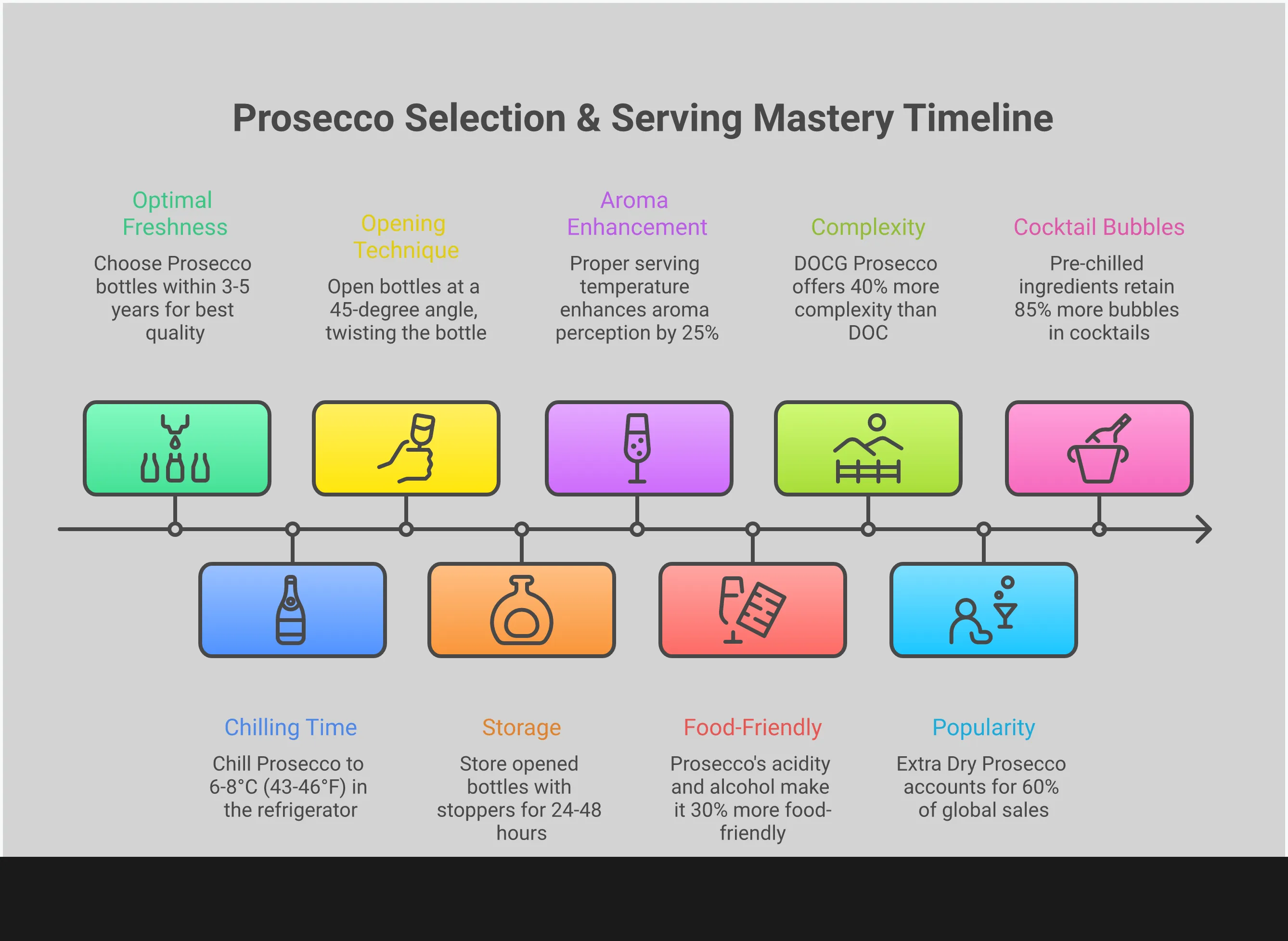
To let Prosecco’s bright, fruity notes shine, you’ll want to serve it chilled, right around 6–8°C (43–46°F). A few hours in the refrigerator before you plan to serve it is perfect. While a classic flute is festive, a tulip-shaped glass is actually the best choice for Prosecco. The wider bowl allows the wine’s delicate aromas to collect, while the tapered rim directs them right to your nose, giving you a much richer tasting experience. It’s this vibrant character that makes Prosecco a fantastic aperitif to kick off an evening or the star ingredient in a refreshing spritz.
How to Open and Keep It Fresh
Unlike many other wines, Prosecco isn’t meant to be stored in a cellar for years. It’s crafted to be enjoyed young, while its flavors are fresh and lively. Most bottles are at their best within three to five years of their vintage. When you’re ready to open it, hold the bottle at a 45-degree angle, grip the cork firmly, and twist the bottle (not the cork) to gently ease it out with a quiet hiss. If you have leftovers, use a sparkling wine stopper to keep the bubbles fresh for another day or two in the fridge. This way, you can savor the crisp, delicious taste of your favorite sparkling wines without any waste.
The Best Food Pairings for Prosecco
One of the best things about Prosecco is its incredible versatility with food. Its bright acidity, crisp bubbles, and fruity notes make it a fantastic partner for a wide range of flavors, from salty appetizers to spicy main courses. Unlike some wines that demand a very specific pairing, Prosecco is wonderfully easygoing. It’s the perfect bottle to open when you have friends over because it’s almost guaranteed to complement whatever you’re serving. The bubbles act as a palate cleanser, preparing your taste buds for the next delicious bite. This refreshing quality is what makes it so food-friendly; it doesn't overpower dishes but instead enhances them. Whether you're planning an elaborate dinner, a casual brunch, or just setting out some simple snacks for a movie night, a chilled bottle of Prosecco is always a great choice to have on hand. It’s a simple way to make any meal feel a little more special without any of the fuss. Think of it as your go-to sparkling wine for nearly any occasion, ready to pair with everything from potato chips to pad thai. Its approachable price point also means you can enjoy it regularly, experimenting with different pairings to find your favorites.
Perfect Appetizers and Light Bites
Prosecco truly excels when served with appetizers and light bites. Its lively effervescence and crispness cut through rich and salty flavors beautifully, which is why it’s a classic choice for a charcuterie board. The wine’s acidity cleanses the palate after bites of cured meats like prosciutto or salami and creamy cheeses. It also pairs wonderfully with fried foods, like calamari or arancini, as the bubbles and tartness balance out the oiliness. Other great matches include bruschetta with fresh tomatoes, olives, and salted nuts. Basically, if you’re looking for the perfect wine to kick off a gathering, you can’t go wrong with Prosecco.
Main Courses: From Seafood to Spice
While it’s a star with starters, don’t count Prosecco out for the main course. Its light body and fruity character make it an ideal companion for delicate seafood dishes, such as grilled fish, shrimp scampi, or sushi. It also works well with light pasta dishes, especially those with cream or vegetable-based sauces. Surprisingly, Prosecco can stand up to a bit of heat. Its subtle sweetness offers a pleasant contrast to the spice in many Asian cuisines, like Thai or Vietnamese food. And of course, Prosecco is a key ingredient in some of the most refreshing cocktails, including the Bellini, Mimosa, and Aperol Spritz, which are all fantastic brunch or dinner drinks.
Delicious Desserts and Cheeses
When it comes to dessert, Prosecco continues to shine, particularly if you choose a bottle labeled "Extra Dry" or "Dry," which are slightly sweeter styles. These pair wonderfully with fruit-based desserts like tarts, sorbets, or a simple bowl of fresh berries and cream. The wine’s fruit notes of green apple, pear, and melon echo the flavors in the dessert without being overly sweet. It’s also a fantastic match for lighter cakes, like angel food or sponge cake. And if you prefer a cheese course for dessert, Prosecco is an excellent choice. It complements a wide range of cheeses, from soft and creamy brie to salty and firm Parmigiano-Reggiano.
Why Prosecco Shines in Cocktails
Prosecco's bright, fruity character and lively bubbles make it a bartender's best friend. It mixes beautifully without getting lost, adding a refreshing sparkle to everything from simple brunch drinks to sophisticated evening cocktails. Its approachable nature means you don't have to be a professional to create something truly delicious at home. Let's look at a few classics and explore what makes this Italian sparkling wine such a star player in the world of mixed drinks.
Classic Cocktails to Try
Prosecco is the backbone of some of the world's most beloved cocktails. Think of the classic Bellini, a simple yet elegant mix of Prosecco and white peach purée that transports you straight to a Venetian cafe. Or consider the ever-popular Aperol Spritz, where Prosecco's crispness cuts through the bittersweet notes of the liqueur for the perfect pre-dinner drink. And of course, there's the Mimosa, a brunch staple where Prosecco and orange juice create a simple, celebratory sip. These drinks are popular for a reason: they're easy to make and showcase how well Prosecco plays with fruity and herbal flavors.
The Magic of Bubbles in a Mixed Drink
So, what makes Prosecco such a go-to for cocktails? First, it offers fantastic quality at a price point that won't make you hesitate to mix it. Unlike some of its pricier sparkling cousins, Prosecco is an accessible luxury. Its flavor profile is another key factor. With notes of green apple, pear, and citrus, it adds a crisp, fruity lift to a drink without overpowering the other ingredients. The effervescence also brings a delightful texture and festive feel to any creation. Using Prosecco is a simple way to add a touch of sparkle and sophistication to your home bar, making it a staple in our wine collection.
How to Choose a Great Bottle of Prosecco
Walking into a wine shop or browsing online can feel a little overwhelming with so many choices. But picking a fantastic bottle of Prosecco is easier than you think once you know what to look for. The secret is on the label. It tells you everything about the quality and origin of the wine inside, helping you find a bottle that perfectly suits your taste and budget.
Decoding the Label
The label on a bottle of Prosecco holds all the clues you need to find a quality pour. The most important thing to look for is a designation that guarantees the wine's origin and production standards. You'll see this as either "DOC" or "DOCG" printed on the neck of the bottle.
DOC (Denominazione di Origine Controllata) is a great starting point. It means the Prosecco comes from its designated region in northeastern Italy and follows specific quality rules. For an even better bottle, look for DOCG (Denominazione di Origine Controllata e Garantita). This is the highest classification for Italian wine, indicating that the grapes come from smaller, steeper hillsides with superior growing conditions, like the renowned Conegliano Valdobbiadene area.
Does a Higher Price Mean Better Quality?
Prosecco is celebrated for its affordability, but does spending a little more get you a better bottle? Often, the answer is yes. While you can find perfectly pleasant Prosecco at a very low price, paying a few extra dollars can lead to a significant jump in quality.
A higher price tag usually reflects a move from a broad DOC region to a more specific and prestigious DOCG area. Wines from these smaller zones are made with more care, often resulting in more complex flavors and finer, more persistent bubbles. You're not just paying for a name; you're paying for superior grapes and craftsmanship. Think of it as finding great value rather than just spending more. A small step up in price can deliver a much more rewarding drinking experience.
Frequently Asked Questions
Is "Extra Dry" Prosecco actually dry? This is a great question because the labeling can be a bit confusing. The driest style of Prosecco is actually "Brut," which has the least amount of sugar. "Extra Dry" is a step up in sweetness from Brut, offering a nice balance of fruitiness with just a hint of sweetness. It's the most popular style for a reason, as it's incredibly versatile and pleasing to most palates. If you prefer a sweeter wine, look for one labeled "Dry."
Should I save a bottle of Prosecco for a special occasion years from now? Unlike some wines that get better with age, Prosecco is crafted to be enjoyed while it's young and fresh. Its charm lies in its vibrant, fruity notes and crisp character, which are at their peak within a few years of the vintage date. So, there's no need to wait for a big milestone to pop the cork. The best time to enjoy that bottle is soon after you buy it.
What's the real difference between DOC and DOCG Prosecco? Think of DOC as a guarantee of quality and origin, ensuring your wine is authentically from the designated Prosecco region in Italy. It's a fantastic standard for everyday enjoyment. DOCG is the next level up, representing the highest tier of Italian wine. These bottles come from smaller, steeper hillside vineyards with stricter production rules, often resulting in a wine with more complexity, finer bubbles, and more nuanced aromas.
When should I choose Prosecco over Champagne? It really comes down to the occasion and your flavor preference. Reach for Prosecco when you want something light, crisp, and refreshingly fruity. It's perfect for casual get-togethers, brunch cocktails, or pairing with appetizers and seafood. Choose Champagne for its richer, more complex profile with toasty, yeasty notes. Its elegance and fine bubbles make it a classic choice for major celebrations or when you want a more contemplative sipping experience.
Can I use any style of Prosecco for cocktails like an Aperol Spritz? For most cocktails, a Brut or Extra Dry Prosecco in the Spumante (fully sparkling) style is your best bet. A Brut will give your drink a crisp, clean finish that balances well with sweeter liqueurs or fruit juices. An Extra Dry, with its touch of sweetness, is also a fantastic choice that complements the bittersweet notes in a classic spritz. I'd avoid using a Frizzante style, as its gentler bubbles might get lost in the mix.