


Single Malt vs Blended Scotch: What's the Difference?

Every bottle of Scotch tells a story. A single malt tells the story of one specific place, capturing the unique character of a single distillery. Think of it as a solo artist’s performance, a pure expression of its origin. A blended Scotch, on the other hand, tells a story of harmony and collaboration, where a master blender skillfully combines whiskies from different distilleries to create a balanced and consistent final product. This is the essential difference in the single malt vs blended Scotch discussion. One is a portrait of individuality, while the other is a masterpiece of teamwork. Both are worth exploring.
Key Takeaways
- Origin Defines the Style, Not the Quality: A single malt is the product of one distillery using only malted barley, giving it a unique character. A blended Scotch combines whiskies from multiple distilleries to achieve a specific, consistent flavor.
- Match the Scotch to the Occasion: Choose a single malt for focused sipping when you want to explore complex, distinct flavors. A blended Scotch is your go-to for versatility, making it perfect for cocktails or easygoing social drinks.
- Your Palate Is the Best Guide: There are exceptional bottles in both categories, so don't get caught up in the "better" debate. The best way to find what you love is to explore different styles and discover what truly suits your personal taste.
Single Malt vs. Blended Scotch: What's the Difference?
Walking down the Scotch aisle can feel a little overwhelming with all the different labels and terms. But once you understand the two main categories, single malt and blended, finding your perfect bottle becomes much easier. The names tell you a lot about what’s inside, from the ingredients used to the distillery where it was made. Let's break down what sets them apart, how they're made, and why you might prefer one over the other.
What Is Single Malt Scotch?
A single malt Scotch is a whisky that meets two very specific criteria: it’s made at a single distillery and uses only 100% malted barley. The "single" in the name refers to the distillery, not a single barrel or batch. This process gives the distiller complete control over the final flavor, allowing the unique character of that specific distillery and its region to shine through. Think of it as a solo artist’s album; it’s a pure expression of one producer’s vision and style. Exploring single malts is a great way to taste the distinct differences that geography and craftsmanship bring to a bottle of whisky.
What Is Blended Scotch?
Blended Scotch is the most popular style of Scotch in the world, and for good reason. It’s a combination of one or more single malt whiskies mixed with one or more single grain whiskies (made from grains like corn or wheat) from various distilleries. The art of the master blender is to create a consistent, balanced, and smooth flavor profile year after year. By combining different whiskies, blenders can craft a final product that is often more approachable and versatile than a single malt. These blends are the backbone of the Scotch industry and include some of the most iconic spirits on the market.
How Their Production Differs
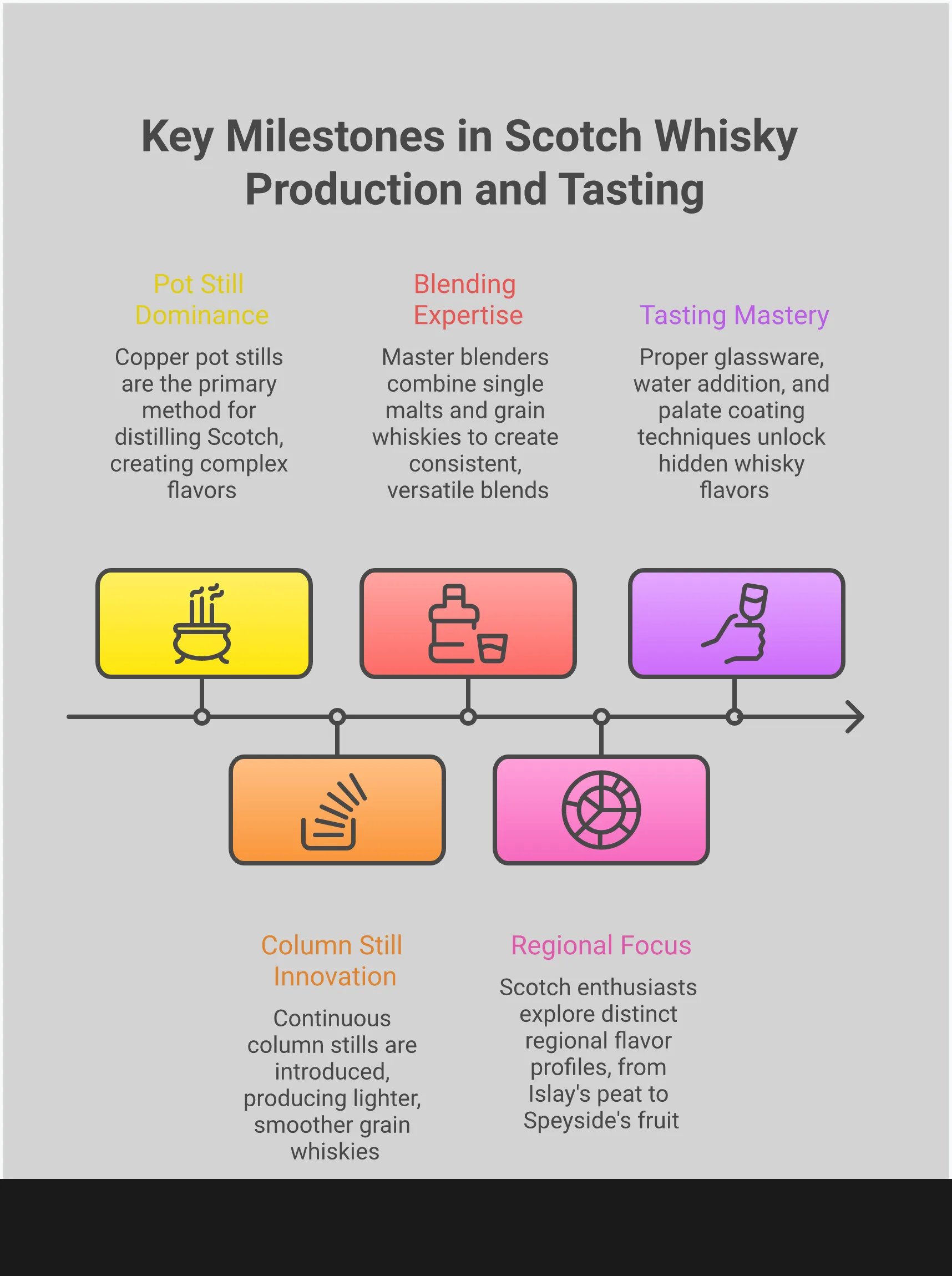
The key difference in production comes down to the stills. Single malts are distilled in copper pot stills, which work in smaller batches. The shape and size of these stills have a huge impact on the spirit’s final character, creating a richer and more complex flavor. Grain whisky, a key component in blends, is typically made in a continuous column still. This method is more efficient and produces a lighter, smoother, and more neutral spirit. The master blender then uses these different components, combining the bold character of malts with the delicate smoothness of grain whiskies to create a harmonious final product.
Busting Common Scotch Myths
One of the biggest myths is that blended Scotch is somehow inferior or made from the barrels that weren't good enough for single malts. That couldn't be further from the truth. Most whisky is actually produced with the specific intention of being used in a blend. Creating a consistent and beloved blend is a highly skilled art form. While single malts are incredibly popular now, their consistency is a relatively modern achievement thanks to better technology. Ultimately, neither style is better than the other; they’re just different expressions of Scottish distilling, with fantastic options available in both categories, including many great gifts under $100.
How Is Scotch Made?
The real difference between single malt and blended Scotch isn't just about the name on the bottle; it all comes down to how they're made. From the grains they use to the stills they're distilled in, every step of the production process shapes the final spirit in your glass. Understanding these distinctions is the key to figuring out which type of Scotch you'll enjoy most. Let's walk through the specific methods that give each whisky its unique character.
The Single Malt Process
Think of a single malt as a snapshot of one specific place and time. To earn its name, a single malt Scotch must meet two strict criteria: it has to be made from 100% malted barley, and it must be the product of a single distillery. This process is all about showcasing the unique character of that distillery, from its water source to its specific production techniques. Distillation happens in traditional copper pot stills, which are known for creating a rich and complex spirit. This focused approach is why single malts often have such distinct and powerful flavor profiles that reflect their origin.
The Art of Blending Scotch
If a single malt is a solo performance, a blended Scotch is a full orchestra. Blending is a true art form, where a Master Blender skillfully combines different whiskies to create a consistent and balanced final product. A blended Scotch is a mix of at least one single malt whisky and at least one single grain whisky. Often, they contain dozens of different whiskies from various distilleries. The grain whisky, which makes up a significant part of the blend, provides a smoother, lighter base that allows the different malt whiskies to harmonize beautifully. This creates a more approachable and often versatile spirit.
Pot Stills vs. Column Stills
The type of still used for distillation has a huge impact on the final spirit. Single malts are distilled in copper pot stills. This is a batch process that is less efficient but allows more flavorful compounds to carry over into the final whisky, resulting in a spirit with more body and complexity. In contrast, the grain whisky used in blends is typically made using a column still (or Coffey still). This method is a continuous process that is much more efficient and produces a lighter, purer, and more neutral spirit. This clean base is the perfect canvas for the Master Blender to build upon with various single malts.
The Grains and Ingredients That Matter
The ingredients list for Scotch is deceptively simple, but the small differences are everything. For a single malt, the only grain allowed is malted barley. That’s it. This singular focus is what gives single malts their characteristic rich, biscuity notes. Blended Scotch, on the other hand, has more flexibility. It combines single malt (made from malted barley) with grain whisky, which can be made from other cereals like corn or wheat. This variety of grains is what gives many blended whiskies their smoother, often sweeter, and more accessible flavor profile.
Which Scotch Tastes Better?
Asking whether single malt or blended Scotch is "better" is like asking if a guitar is better than a piano. They’re both capable of making beautiful music, but they create it in very different ways. The right choice really comes down to your personal taste and the experience you’re looking for. One isn’t superior to the other; they simply offer different things. A single malt tells the story of one specific distillery, while a blend tells the story of a harmonious collaboration. Let’s explore the flavors of each to help you find the Scotch that tastes best to you.
Exploring Single Malt Flavors
Single malt Scotch is all about individuality. Since it’s made from 100% malted barley at a single distillery, its flavor is a direct reflection of that distillery’s unique process and location. Think of it as a solo artist’s performance. You’ll find an incredible range of complex and intense flavors, from the smoky, peaty notes of an Islay malt to the light, fruity, and floral character of one from Speyside. Each bottle offers a distinct personality, making the journey through the world of single malts a true adventure. If you enjoy picking out specific notes and appreciating a spirit with a strong point of view, a single malt is an excellent place to start.
Understanding Blended Scotch Flavors
If a single malt is a solo artist, a blended Scotch is a full orchestra. It combines various single malts with grain whiskies from multiple distilleries. The goal here is balance, consistency, and smoothness. The master blender’s job is to skillfully combine these different whiskies to create a final product that is harmonious and often more approachable than a single malt. This is why a bottle of your favorite blend tastes the same every time you buy it. Blends are known for being versatile and smooth, making them fantastic for cocktails or for those who are just beginning to explore the world of Scotch whisky. They offer a well-rounded and reliable flavor experience.
How Region Shapes the Taste
The flavor of a single malt is deeply connected to where it was made. Scotland has several distinct whisky-producing regions, and each one imparts a general character to its spirits. For example, whiskies from Islay are famous for their powerful, smoky, and peaty flavors, thanks to the peat used to dry the barley. In contrast, the Speyside region is known for producing malts that are much lighter, sweeter, and often have notes of fruit and flowers. The Highlands offer a diverse range, from rich and full-bodied to fragrant and floral. Understanding these regional differences can give you a great starting point for finding a single malt you’ll love.
A Quick Taste Test: Glenfiddich vs. Johnnie Walker
To really understand the difference, let’s compare two classics. Pour a glass of Glenfiddich 12 Year Old, a classic Speyside single malt. You’ll likely notice fresh and fruity notes, like pear and apple, with a long, smooth finish of oak. It’s a clear expression of its distillery. Now, try Johnnie Walker Black Label. This blend is incredibly smooth and balanced. You’ll find a gentle smokiness layered with creamy toffee, sweet fruit, and a hint of spice. While the Glenfiddich is a focused performance, the Johnnie Walker is a complex harmony of many different notes working together.
Why One Isn't Better Than the Other
Ultimately, the best Scotch is the one you enjoy drinking. While some whisky enthusiasts prefer the distinct character of single malts, many of the world’s most iconic and beloved whiskies are blends. There are exceptional bottles in both categories, just as there are mediocre ones. It all comes down to your personal preference and the occasion. You might prefer a complex single malt for slow sipping and contemplation, while a smooth, versatile blend could be your go-to for a casual get-together or a classic cocktail. The best approach is to keep an open mind and explore the wide world of spirits to discover what truly suits your palate.
How Does Aging Change the Flavor?
When it comes to Scotch, age is more than just a number. It’s a crucial part of the spirit’s journey, transforming it from a harsh, clear liquid into the complex, amber-hued drink we know and love. The time spent in a wooden cask is where the real magic happens. During this maturation period, the whisky breathes, interacting with the oak to soften its fiery edges and absorb a world of new flavors, aromas, and colors. This process is fundamental to every bottle of Scotch, whether it’s a single malt from one distillery or a blend from many. The type of wood, the climate of the warehouse, and the sheer length of time all work together to shape the final character of the spirit. It's a slow, patient art that can't be rushed. Understanding how aging works is the key to appreciating what’s in your glass and finding the perfect bottle that speaks to your personal taste. It helps you read a label and know what to expect, turning a simple purchase into a more informed and enjoyable experience.
The Rules of Aging
You can’t just put any spirit in a barrel for a few months and call it Scotch. There are strict rules, and for good reason. By law, all Scotch whisky must be aged in oak barrels for a minimum of three years. This isn't an arbitrary number; it's the legally mandated time required for the spirit to mellow out and develop its foundational flavors and character. This regulation ensures a baseline of quality and distinguishes Scotch from other whiskies around the world. So, when you pick up a bottle, you know it has undergone at least this essential period of maturation, allowing it to shed its raw, fiery notes and begin building its signature smoothness.
The Role of the Cask
Think of the cask as the most important ingredient after the spirit itself. The type of oak barrel used to age a whisky has a massive impact on its final taste. Most Scotch is aged in casks that previously held other spirits, most commonly American bourbon or Spanish sherry. Barrels that held bourbon tend to impart sweet notes of vanilla, caramel, and coconut, while former sherry casks contribute richer flavors of dried fruit, nuts, and spice. The type of wood and its previous contents are what give different whiskies their unique personalities, from light and floral to deep and smoky.
What Do Age Statements Really Mean?
Seeing a number like 12, 15, or 18 on a bottle of Scotch feels straightforward, but what does it actually mean? An age statement always refers to the youngest whisky in the bottle. For a single malt, this is simple, as all the spirit comes from one distillery. For a blended Scotch, which might contain dozens of different whiskies, a "12-Year-Old" label guarantees that every single drop in that blend has been aged for at least 12 years. Many of the whiskies in the mix might be much older, but the number on the bottle gives you a transparent baseline for its maturity.
How Blending Changes the Game
Aging is where a master blender truly shines. While a single malt represents the character of one distillery, a blended Scotch is a carefully constructed harmony of many. Blenders use a wide palette of whiskies, each with different ages and flavor profiles, to create a final product that is balanced, complex, and consistent year after year. The goal is to craft a smooth and approachable flavor profile that is often greater than the sum of its parts. By combining mature, oaky whiskies with younger, more vibrant ones, they can achieve a depth and consistency that defines some of the world's most iconic whisky brands.
How to Choose the Right Scotch for You
Picking the right Scotch is less about following strict rules and more about understanding your own preferences. The best bottle for you depends on your taste, the occasion, and your budget. Think of single malts and blends not as competitors, but as two different, equally valid expressions of Scotch whisky. One isn't inherently better than the other; they just offer different experiences.
Whether you're looking for a complex spirit to sip and contemplate or a versatile whisky to share with friends, there’s a perfect Scotch waiting for you. Let’s walk through how to find it. By considering your ideal flavor profile and how you plan to enjoy your drink, you can confidently select a bottle you’ll love.
Find Your Flavor Profile
The first step is to think about what flavors you generally enjoy. Single malt Scotches are known for their distinct and complex character. Because they come from one distillery, they reflect a specific style, often featuring bold notes that can be smoky, fruity, or floral. If you love exploring unique tastes and want to experience the specific character of a distillery, a single malt is an excellent choice.
Blended Scotch, on the other hand, is crafted for balance and smoothness. Master blenders combine different whiskies to create a consistent and approachable flavor profile. If you prefer a mellower, more harmonious drink that’s easy to enjoy, you’ll likely appreciate a good blended Scotch. It’s a great way to get acquainted with the category without being overwhelmed by a single, intense flavor.
When to Pour Each Type
Consider the setting. Are you settling in for a quiet evening or hosting a lively get-together? Single malts are often best for moments of quiet appreciation. Their complex flavors are perfect for sipping slowly, either neat or with a splash of water, allowing you to explore every nuance. Think of it as an experience in a glass.
Blended Scotch is the ultimate team player. Its balanced profile makes it incredibly versatile and a fantastic base for classic cocktails like a Penicillin or a simple Scotch and soda. It’s a reliable and crowd-pleasing option when you’re entertaining or just want an easy-drinking spirit to unwind with. Choose a single malt for deep exploration and a blend for social, easygoing enjoyment.
Getting the Best Value for Your Bottle
While single malts often come with a higher price tag, that doesn't automatically mean they offer better value. Their cost reflects a more specialized production process and the reputation of a single distillery. Blended Scotches are generally more affordable and make up the vast majority of Scotch sales worldwide for a reason: they offer incredible consistency and quality for their price.
Finding good value is about matching the price to the experience you want. You can find a fantastic, satisfying blended Scotch for a very reasonable price, making it a great everyday option. There are many excellent whiskies under $100 in both categories. Don’t let price be the only guide; a delicious, well-made blend can provide just as much enjoyment as a pricier single malt.
How to Build Your Scotch Collection
A great whisky collection is built on variety, not just prestige. While many enthusiasts gravitate toward single malts, some of the world's most respected whiskies are blends. The key is to remember that quality exists in both categories. There are phenomenal blends and, frankly, some pretty forgettable single malts. The fun is in the discovery.
To start, try picking up one of each: an approachable blended Scotch and a classic single malt from a region that interests you, like a fruity Speyside or a smoky Islay. This gives you a great baseline for comparison. As you learn what you like, you can branch out, exploring different distilleries, regions, and even some rare finds. The best collection is one that reflects your personal journey and taste.
Related Articles
- 13 Year Old Mortlach Single Malt Scotch - Signatory
- The Famous Grouse 12 Year Old Blended Malt Scotch
Frequently Asked Questions
Is single malt really better than blended Scotch? Not at all. This is one of the biggest misconceptions in the whisky world. Think of it this way: a single malt is a solo performance that showcases one distillery's unique style, while a blend is a full orchestra creating a complex harmony. Both can be incredible. Some of the most iconic and well-respected whiskies are blends, and their creation is a true art form. The best choice simply comes down to your personal taste and the occasion.
What does the age statement on a blended Scotch actually mean? The number on the bottle, like 12 or 18, always refers to the age of the youngest whisky used in the blend. So, if you have a bottle of 12-year-old blended Scotch, every single drop of whisky inside has been aged for at least 12 years. Many of the whiskies in the mix could be much older, but the age statement gives you a guaranteed baseline of maturity.
I'm new to Scotch. Where should I start? A great starting point is a classic, well-made blended Scotch. Blends are designed to be smooth, balanced, and approachable, which makes them a perfect introduction to the general flavor profile of Scotch without being overwhelming. Once you're comfortable, try a single malt from the Speyside region. They are typically known for being fruity and floral, offering a clear taste of a single distillery's character.
Can I use a single malt in a cocktail? You absolutely can. While versatile blends are often the go-to for cocktails because of their balanced flavor and accessible price, there are no hard rules. A single malt can work beautifully in a simple cocktail, like an Old Fashioned, where its distinct character can still shine through. You just might want to think twice before mixing a very old or expensive single malt with lots of other strong ingredients.
What's the difference between a single malt and a single grain whisky? The word "single" in both names means the whisky comes from just one distillery. The difference is the main ingredient. A single malt must be made from 100% malted barley. A single grain whisky, on the other hand, is made from other grains like corn or wheat, often with a small amount of malted barley included. Single grain whiskies are typically lighter and smoother, which is why they form the perfect base for most blended Scotch.