


Monkey Shoulder Scotch Review: Is It Worth It?

The first thing that grabs your attention about Monkey Shoulder Scotch is its quirky name. It’s not just a catchy marketing gimmick; it’s a tribute to the distillery workers, or "maltmen," who historically turned barley by hand. This physically demanding job sometimes caused a temporary shoulder strain they nicknamed "monkey shoulder." This name perfectly captures the spirit of the brand: it honors the hard work and tradition of whisky-making while maintaining a playful, unpretentious attitude. But there’s much more to this bottle than a clever story. Let’s look at the unique triple malt blend and handcrafted process that make it so consistently smooth and delicious.
Key Takeaways
- It's a Blend of Only Single Malts: Monkey Shoulder is a "triple malt," meaning it's crafted exclusively from three different single malt whiskies. This all-malt recipe gives it a richer, smoother character than many other blended whiskies in its price range.
- Enjoy Its Smooth and Versatile Flavor: With welcoming notes of vanilla, honey, and orange, this Scotch is exceptionally easy to drink. Its balanced profile makes it perfect for sipping neat, on the rocks, or as a reliable and flavorful base for classic cocktails.
- A High-Value Bottle for Any Bar Cart: Monkey Shoulder offers a premium experience at an accessible price. Its approachable taste makes it an ideal starting point for Scotch newcomers and a dependable staple for seasoned drinkers looking for a great cocktail whisky.
What Makes Monkey Shoulder Scotch Stand Out?
In a world full of incredible whiskies, Monkey Shoulder has carved out a special place for itself, and for good reason. It’s not just another pretty bottle; it’s a whisky with a story, a unique composition, and a friendly spirit that makes it approachable for newcomers and respected by seasoned drinkers. From its quirky name to its meticulous creation process, every element is designed to deliver a smooth, versatile, and utterly enjoyable experience. It’s a bottle that confidently breaks from stuffy tradition while still honoring the craft. Let’s get into what makes this blended malt a standout choice on any bar cart.
The Story Behind the Name
First things first, let's talk about that name. "Monkey Shoulder" isn't just a random, catchy phrase. It’s a nod to the history and hard work of whisky making. In the old days, distillery workers, known as "maltmen," would spend long hours turning barley by hand with large wooden shovels. This repetitive motion often led to a temporary strain in their shoulders, which they affectionately called "monkey shoulder." The name pays homage to these craftsmen and the traditional methods that are at the heart of Scotch production. It’s a tribute to the people and the passion behind the spirit.
A Unique Triple Malt Blend
What truly sets Monkey Shoulder apart is its DNA. It’s not a single malt, but a "triple malt," meaning it’s a blend of three different single malts from three of Speyside's most famous distilleries: Glenfiddich, Balvenie, and Kininvie. This isn't a random mix; it's a carefully crafted recipe. Each of these single malts brings its own character to the party—vanilla notes from one, fruity tones from another, and a rich smoothness from the third. By blending them, the master distillers create a whisky that is perfectly balanced, exceptionally smooth, and more complex than the sum of its parts.
The Handcrafted Process
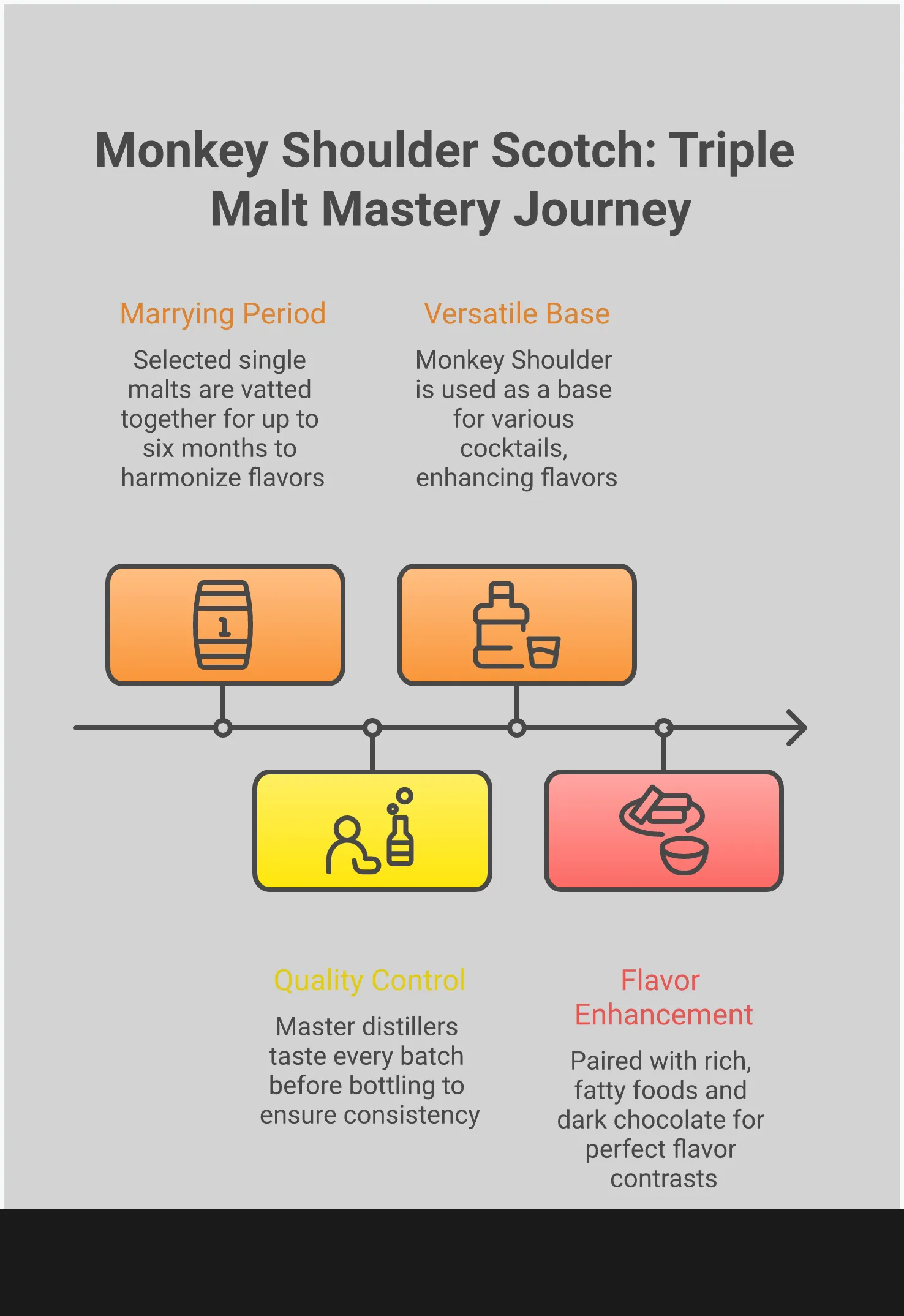
The commitment to quality doesn't stop with the selection of malts. The process is all about precision and a handcrafted touch. The chosen single malts are vatted together in small batches for up to six months. This "marrying" period is crucial, as it allows the distinct flavors from the three distilleries to meld together, creating a harmonious and consistent profile. The distillers taste every single batch to ensure it meets their high standards before it's bottled. This dedication to a hands-on approach ensures that every bottle of Monkey Shoulder you open delivers the same rich, smooth, and easy-drinking experience.
Blended Malt vs. Blended Scotch: Clearing the Air
It’s important to understand a key distinction in the world of Scotch. Monkey Shoulder is a blended malt, which means it is a blend of 100% single malt whiskies from different distilleries. This is different from a blended Scotch, which can contain a mix of both malt whisky and grain whisky. There’s nothing wrong with blended Scotch, but a blended malt like Monkey Shoulder offers a richness and complexity that comes purely from malted barley. This focus on malt gives it a robust flavor profile that’s perfect for sipping neat but also versatile enough to shine in cocktails.
What Does Monkey Shoulder Taste Like?
Monkey Shoulder is known for being incredibly smooth and approachable, which is why it’s a favorite for both sipping and mixing. It’s a blended malt whisky, meaning it’s a mix of single malts from different distilleries, giving it a balanced and layered flavor profile. This process ensures a consistent, high-quality taste that’s free from the harshness some people associate with Scotch. If you're curious about what's actually in the bottle, here’s a breakdown of what you can expect from your first sip to the last.
On the Nose: Honey, Vanilla, and Fruit
Before you even take a sip, the aroma of Monkey Shoulder sets a welcoming tone. The first thing you’ll likely notice is a wave of zesty orange, followed by softer notes of vanilla and honey. It’s a bright and fruity bouquet, with hints of banana, pineapple, and pear mingling in the background. Some people also pick up warmer scents like maple syrup, a dash of cinnamon, and even a touch of white chocolate. It’s a complex and inviting aroma that promises a smooth, easy-drinking experience without any aggressive alcoholic burn on the nose.
The Palate: Spices, Chocolate, and Citrus
When you take a sip, the flavor delivers on the aroma's promise. The mouthfeel is on the lighter side, but it’s packed with rich, mellow flavors. Think of a Terry’s Chocolate Orange—that classic combination of creamy milk chocolate and bright citrus is a great starting point. You'll also find that honey and vanilla from the nose carry through, joined by warm baking spices like clove. It’s sweeter and spicier than you might expect from the scent alone, creating a really pleasant balance on the tongue that makes it interesting to sip on its own.
The Finish: Smooth and Lasting
The "finish" is the lingering taste after you swallow, and Monkey Shoulder’s is exceptionally smooth. It doesn’t stick around for too long, which makes it very easy to sip again and again. The flavors that remain are gentle and sweet, often described as reminiscent of banana candy and sweet cinnamon. A subtle touch of oak rounds out the experience, leaving a clean and pleasant aftertaste. This smooth finish is a key reason why it works so well in cocktails—it complements other ingredients without overpowering them.
How It Stacks Up Against the Competition
When it comes to value, Monkey Shoulder consistently punches above its weight. For its price point, it offers a level of complexity and smoothness that you’d typically find in more expensive bottles. It’s one of the best entry-level spirits for anyone new to Scotch because it’s so approachable, but it has enough character to satisfy seasoned whisky drinkers too. It’s a fantastic, versatile bottle that proves you don’t need to spend a fortune to enjoy a high-quality dram, whether you're mixing it or enjoying it neat.
Is Monkey Shoulder Worth It?
So, let's get straight to the point: is Monkey Shoulder a good Scotch? The short answer is a resounding yes. It has earned a prime spot on back bars and home bars everywhere, and for good reason. It’s approachable, versatile, and delivers a fantastic experience without the intimidating price tag you might associate with quality Scotch. Monkey Shoulder successfully broke away from the often-stuffy image of Scotch, presenting itself as a whisky made for mixing and enjoying without strict rules. This playful attitude, combined with a seriously well-made spirit, is a huge part of its charm.
It’s a blended malt, which means it’s a marriage of different single malt whiskies—in this case, three from Speyside—with no cheaper grain whisky added. This is a key distinction that places it a step above many other blended whiskies in its price range, offering more character and depth. Whether you're just starting to explore the world of whisk(e)y or you're a seasoned enthusiast looking for a reliable bottle for cocktails, Monkey Shoulder consistently proves its value. It manages to be both an excellent introduction for newcomers and a dependable staple for connoisseurs, a rare feat in the spirits world.
Breaking Down the Price Tag
One of the first things you’ll notice about Monkey Shoulder is its friendly price. Typically landing in the $30–$40 range for a standard 750ml bottle, it sits in a sweet spot that makes it accessible to almost everyone. In a category where prices can easily climb into the hundreds, Monkey Shoulder offers a welcome dose of reality. You don't need to spend a fortune to enjoy a well-crafted, smooth-sipping Scotch. This affordability makes it a low-risk choice if you're curious about blended malts but aren't ready to commit to a more expensive bottle. It’s the kind of purchase you can feel good about, knowing you’re getting a solid product without straining your wallet.
Why It's a High-Value Bottle
Value isn't just about being inexpensive; it's about what you get for your money. And with Monkey Shoulder, you get a lot. This blended malt delivers a level of balance and complexity that you’d typically expect from a pricier bottle. It’s crafted from three different Speyside single malts, creating a profile that is smooth, rich, and incredibly easy to drink. The quality of the liquid inside far exceeds its modest price, making it a high-value player in the world of spirits. It’s a whisky that consistently punches above its weight, offering a satisfying experience that proves great Scotch can be both affordable and delicious.
Perfect for Beginners and Experts Alike
Monkey Shoulder has a unique appeal that bridges the gap between newcomers and connoisseurs. If you're new to Scotch, this is an ideal starting point. It lacks the intense, smoky peat that can be off-putting to some, offering a gentle introduction with notes of vanilla, honey, and fruit. For the seasoned drinker, it’s a reliable and versatile workhorse. You can enjoy it neat or use it in a cocktail without feeling guilty about mixing a top-shelf single malt. It’s the perfect, no-fuss dram for a casual evening and a bottle that’s always great to have on hand for sharing with friends, no matter their experience level.
One Bottle, Many Possibilities
Versatility is where Monkey Shoulder truly shines. This isn't a bottle that will gather dust on your shelf, waiting for a special occasion. It’s designed to be enjoyed in any way you see fit. Sip it neat to appreciate its creamy, malty character, or add a splash of water or a single ice cube to open up its flavors. Where it really stands out is in cocktails. Its balanced and smooth profile makes it an exceptional base for classics like a Penicillin, Old Fashioned, or Whisky Sour. It mixes beautifully without getting lost, adding a rich depth that complements other ingredients. This adaptability makes it a must-have for any home bar, right alongside your essential liqueurs for crafting the perfect cocktail.
How to Drink Monkey Shoulder
One of the best things about Monkey Shoulder is its versatility. There’s no single “right” way to enjoy it, which makes it a fantastic bottle to have on your bar cart whether you’re a seasoned Scotch drinker or just starting to explore the world of whisky. Its smooth, approachable flavor profile shines in a variety of settings, from a simple weeknight dram to a sophisticated cocktail. So, let’s get into the different ways you can pour and enjoy this exceptional blended malt.
Sip It Your Way: Neat, on the Rocks, or with Water
Because of its inherent smoothness and notes of vanilla and honey, Monkey Shoulder is a delight to sip on its own. Pouring it neat—that is, straight into a glass at room temperature—allows you to experience its full range of aromas and flavors without any dilution. If you prefer a chilled drink, serve it on the rocks (over ice). The cold temperature will slightly mellow the flavors, making for an incredibly refreshing sip. For those who want to open up the whisky’s character, adding a small splash of water can reveal more subtle notes.
Cocktails That Let It Shine
Monkey Shoulder was practically made for mixing. Its balanced and sweet profile won’t get lost in a cocktail; instead, it provides a solid, flavorful base that complements other ingredients beautifully. It’s a fantastic choice for classic whisky cocktails like an Old Fashioned, where its orange and vanilla notes can really sing. It also works wonders in a Whisky Sour, adding a creamy depth that balances the tart lemon juice. If you’re feeling more adventurous, try it in a Blood and Sand for a truly classic experience. This is the bottle to reach for when you want to experiment with your home bartending.
Perfect Pairings: What to Eat with Your Scotch
Pairing food with Scotch can create a memorable tasting experience, and Monkey Shoulder’s Speyside character makes it a great partner for a variety of dishes. Its soft, sweet notes are a perfect match for rich and savory foods. Think about serving it alongside grilled steak or pork, where the whisky’s subtle spice can cut through the richness of the meat. It also pairs wonderfully with creamy cheeses like Brie or a mild cheddar. For dessert, you can’t go wrong with chocolate. The dark, slightly bitter notes of a good chocolate torte or brownie will highlight the vanilla and honey in the Scotch.
Where to Find It (and What to Pay)
Monkey Shoulder offers incredible value, typically priced between $30 and $40 for a 750ml bottle. This makes it an accessible choice for anyone looking to add a quality blended malt to their collection without a huge investment. You can easily find this and other premium spirits right here at Main Street Liquor. We make it simple to get your hands on a bottle, delivering it straight to your door so you can start sipping and mixing without any hassle. It’s a staple for a reason, and we’re happy to help you add it to your shelf.
Related Articles
Frequently Asked Questions
Is Monkey Shoulder a good Scotch for beginners? Absolutely. It's one of the best whiskies to start with if you're new to Scotch. It’s incredibly smooth and lacks the intense, smoky flavor that can be challenging for some palates. Instead, you’ll find friendly notes of vanilla, honey, and orange, which makes it very easy to sip and enjoy right from the first pour.
What makes a "blended malt" different from other blended whiskies? Think of it in terms of ingredients. A blended malt, like Monkey Shoulder, is a mix of 100% single malt whiskies from different distilleries. A standard blended Scotch, on the other hand, can include both single malt and grain whiskies. This focus on pure malt gives Monkey Shoulder a richer, more complex flavor profile than many other blends in its price range.
Is Monkey Shoulder a smoky or peated Scotch? No, Monkey Shoulder is not a smoky Scotch. It comes from the Speyside region, which is known for producing whiskies that are typically fruity, sweet, and malty rather than heavily peated. If you're looking for that classic campfire or medicinal smoke flavor, you'll want to explore whiskies from regions like Islay.
What's the best way to drink Monkey Shoulder? The beauty of this whisky is that there's no wrong way to enjoy it. It's smooth enough to sip neat or with a single ice cube, which lets you appreciate its creamy character. It was also specifically designed to be mixed, so it makes an excellent base for cocktails like an Old Fashioned or a Whisky Sour without getting lost.
Why is it so much more affordable than most single malts? The price reflects its identity as a blended malt. By skillfully combining single malts from three different distilleries, the creators can produce a consistent, high-quality product on a larger scale than a single distillery might. This process allows them to offer a complex, malt-forward experience without the premium price tag often attached to single malt expressions.