


Tequila vs. Mezcal: What's the Real Difference?

A classic Margarita is a thing of beauty, perfectly balancing sweet, sour, and the bright, peppery notes of agave. But what happens when you swap the tequila for its smoky cousin, mezcal? You get a cocktail with a completely different soul: earthy, complex, and layered with character. This simple switch perfectly illustrates the core difference between tequila and mezcal. While one provides a clean and vibrant foundation, the other introduces a rustic, smoky depth. Whether you’re mixing drinks for friends or searching for a spirit to sip and savor on its own, knowing which bottle to reach for is key. Let’s break down what makes each one unique, so you can shake, stir, and sip with confidence.
Key Takeaways
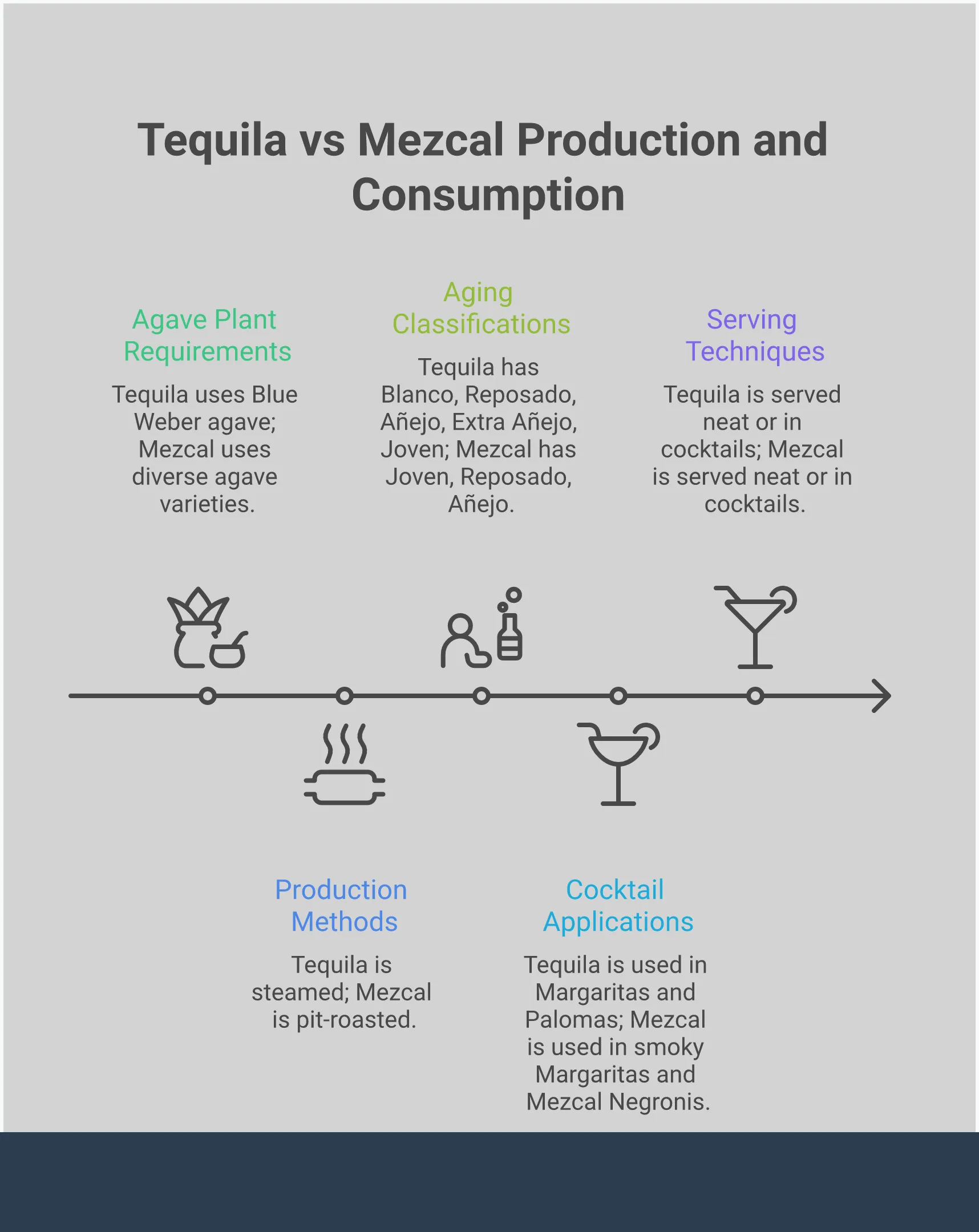
- It all starts with the agave: Tequila is exclusively made from Blue Weber agave, giving it a consistent flavor profile. Mezcal, however, embraces variety and can be made from dozens of different agaves, which is why its taste can vary so much from bottle to bottle.
- Steam versus smoke defines the taste: The biggest flavor difference comes from the cooking process. Tequila's clean, bright notes come from steaming the agave in ovens, while mezcal's signature smoky character is the result of roasting agave in underground pits.
- Choose the right spirit for the moment: Grab a bottle of tequila for classic, refreshing cocktails like Margaritas and Palomas. Reach for mezcal when you want a complex spirit to sip neat or to add a bold, smoky twist to your favorite drinks.
What Are Tequila and Mezcal Made From?
At their heart, both tequila and mezcal are spirits distilled from the agave plant. You can think of it this way: all tequila is technically a type of mezcal, but not all mezcal is tequila. The biggest reason for this distinction comes down to the specific type of agave used, which is strictly regulated for one spirit and wide open for the other. This single difference is the starting point for their unique characters, creating two related but distinct spirits that each tell a story about their origins. Understanding the plant behind the bottle is the first step to appreciating what makes each one special.
Tequila: The Blue Weber Agave Rule
To be called tequila, a spirit must be made from one specific plant: the Blue Weber agave, or Agave tequilana. This isn't just a tradition; it's the law. This strict regulation ensures that every bottle of tequila shares a foundational flavor profile, creating a consistent and recognizable character across different brands. Production is also geographically limited to specific regions of Mexico, with the state of Jalisco being the most famous. The unique climate and volcanic soil there are perfect for growing the sweet, high-quality Blue Weber agave that gives the spirit its signature crisp and peppery notes.
Mezcal: A World of Different Agaves
While tequila follows a single-plant recipe, mezcal embraces diversity. It can be legally produced from more than 30 different types of agave. The most common variety you'll find is Espadín, but the possibilities are vast, including wild agaves like Tobalá, Tepeztate, and Arroqueño. This variety is what gives mezcal its incredible range of flavors and aromas. Because the rules are more flexible, producers often use artisanal methods passed down through generations, resulting in a spirit that can be wildly different from one small town to the next.
How Does the Production Process Differ?
While both tequila and mezcal begin their lives as agave, the way they are made is where their personalities really start to diverge. The production process is a story of tradition versus technology, and it’s the single biggest reason for their distinct flavor profiles. From how the agave is cooked to the specifics of fermentation and distillation, every step adds a unique layer of character. Understanding these differences is the key to appreciating what makes each of these Mexican spirits so special.
How Tequila Is Cooked: Steamed in Ovens
To make tequila, producers start by cooking the heart of the blue agave plant, called the piña. Think of it like preparing a giant artichoke. The piñas are typically steamed or roasted in large, industrial, stainless steel ovens known as autoclaves. This efficient, modern method is designed to evenly cook the agave, converting its complex starches into simple, fermentable sugars. The result is a clean, bright agave flavor that serves as the perfect canvas for the spirit, without any smokiness from the cooking process.
How Mezcal Is Cooked: Roasted in Earthen Pits
Mezcal production, on the other hand, holds onto a more ancient, hands-on technique. Instead of modern ovens, the agave piñas are cooked in underground earthen pits lined with volcanic rocks. The rocks are heated by a wood fire, the piñas are piled on top, covered with agave fibers and earth, and left to roast for several days. This slow-roasting process is what gives mezcal its signature smoky, earthy character. It’s a rustic method that infuses the spirit with the flavor of the earth and fire it came from.
The Impact of Fermentation and Distillation
The differences continue right through to fermentation and distillation. Tequila is typically distilled twice in copper pot stills to achieve a smooth, refined profile. It’s also often aged in oak barrels, which imparts notes of vanilla, caramel, and spice, especially in Reposado and Añejo varieties. Mezcal distillation can vary more, though it's also usually distilled twice. While some mezcals are aged, many are bottled young (as Joven) to preserve the wild, complex flavors of the agave and the smokiness from the cooking process. This final stage is where the nuances of each spirit are truly polished.
Where Do Tequila and Mezcal Come From?
Just like true Champagne can only come from the Champagne region of France, tequila and mezcal have their own geographical protections. This isn't just about rules and regulations; it's about heritage, tradition, and the unique character of the land where the agave grows. The specific place where an agave spirit is made is called a Denomination of Origin (DO), and it has a huge impact on what you taste in your glass. Let's explore the official homelands of these two incredible spirits.
Tequila's Official Production Zone
If you're drinking authentic tequila, it comes from one of five specific states in Mexico. The spirit has a protected status, meaning real tequila must be produced in designated regions. The heart of tequila country is the state of Jalisco, where the vast majority of production happens. However, small parts of Guanajuato, Michoacán, Nayarit, and Tamaulipas are also included in the official zone. This geographical limitation ensures that every bottle meets strict quality and production standards tied to the region's unique climate and soil. So when you see "Hecho en México" on the label, you know it’s from the spirit's rightful home.
Mezcal's Widespread Mexican Roots
Mezcal also has a Denomination of Origin, but its territory is much larger than tequila's. Officially, mezcal can be produced in nine different Mexican states. While Oaxaca is the most famous and accounts for the majority of mezcal production, the other recognized states include Guerrero, Durango, San Luis Potosí, and Zacatecas. This broader geographical range is one of the reasons for mezcal's incredible diversity. Each region brings its own local agave species, traditions, and terroir to the table, resulting in a spirit with a vast spectrum of flavors. It’s a true celebration of Mexico’s rich distilling heritage.
How Geography Shapes the Flavor
So, why does any of this matter? Because geography directly shapes flavor. The concept of terroir, often used in the wine world, applies here too. The soil, altitude, and climate of a region all influence the agave plant as it grows. Tequila, largely from the highlands and lowlands of Jalisco, gets its characteristic notes from the area's rich, volcanic soil. Mezcal's flavor profile is even more varied. With production spanning nine states and using dozens of different agave types, the spirit can taste wildly different from one bottle to the next. An agave spirit from Oaxaca might be smoky and earthy, while one from Durango could be more mineral-driven, all thanks to the unique land where it was born.
What Do Tequila and Mezcal Taste Like?
This is where the real fun begins. While both spirits come from the agave plant, their production methods create two very different flavor experiences. Think of them as cousins with distinct personalities. One is bright, clean, and ready for a party, while the other is smoky, complex, and a bit mysterious. Understanding their unique tastes will help you pick the perfect bottle for any occasion, whether you're mixing a margarita or sipping something neat.
The Taste of Tequila: Clean, Sweet, and Peppery
If you're new to agave spirits, tequila is a great place to start. It generally has a cleaner, more focused flavor profile. You'll often taste notes of sweet, cooked agave, sometimes with hints of tropical fruit and bright citrus. This sweetness is usually balanced by a pleasant, peppery finish that adds a little kick. Because of its approachable and versatile taste, tequila works beautifully in a wide range of cocktails, from a classic Margarita to a simple Ranch Water. It’s also fantastic for sipping, especially when you get into the aged varieties.
The Taste of Mezcal: Smoky, Earthy, and Complex
Mezcal, on the other hand, takes you on a completely different journey. Its signature characteristic is a distinct smokiness, which comes from roasting the agave hearts in underground pits. But there's so much more to it than just smoke. You can find a huge range of complex flavors, including fruity, herbal, earthy, and even mineral notes. Since it can be made from many different types of agave, each bottle of mezcal tells a unique story. This complexity makes it a fascinating spirit to explore on its own, and it adds incredible depth to cocktails like a Mezcal Old Fashioned.
A Quick Note on Alcohol Content
It’s also worth noting how alcohol content can shape your experience. Mezcals are often bottled at a higher proof, sometimes reaching up to 55% ABV (alcohol by volume). This higher strength can carry more intense and complex flavors, offering a bolder sipping experience. Tequila, by contrast, is frequently aged in oak barrels to create smoother reposado and añejo expressions, which mellows the spirit and adds notes of vanilla and caramel. Neither approach is better than the other; it just depends on what kind of spirit you’re in the mood for. Always sip responsibly, especially with higher-proof options.
How Are Tequila and Mezcal Classified?
Just like with whiskey or rum, the time a spirit spends in a barrel plays a huge role in its final character. For tequila and mezcal, the classification system is all about aging. Understanding these categories is the key to finding a bottle you’ll love, whether you’re mixing a margarita or looking for a spirit to sip and savor. The terms on the label tell a story about what’s inside, from the bright, unaged expressions to the deep, complex flavors developed over years in oak. This aging process, or lack thereof, is what separates a crisp, agave-forward Blanco from a rich, complex Extra Añejo.
The type of barrel used, often American or French oak that may have previously held bourbon, also imparts its own character, adding notes of vanilla, caramel, or spice. While both spirits follow a similar aging hierarchy of young, rested, and aged, the specific time requirements and terminology can differ slightly. Getting familiar with these classifications will not only help you understand what you're buying but will also give you the confidence to explore new bottles and find the perfect match for any occasion. It’s the first step to moving beyond the basics and truly appreciating the craftsmanship in every bottle. Think of it as a roadmap to flavor, guiding you from the vibrant and vegetal to the smooth and sophisticated.
Tequila Types: From Blanco to Extra Añejo
Tequila is organized into five official categories based on aging. It starts with Blanco (or Silver), which is unaged and bottled shortly after distillation. This is tequila in its purest form, with bright, peppery agave notes. Next is Reposado ("rested"), which spends between two months and a year in oak barrels, giving it a smoother taste and a pale golden hue. Añejo ("aged") tequila rests for one to three years in barrels, resulting in a darker, richer, and more complex spirit. For true connoisseurs, Extra Añejo is aged for over three years, developing a deep complexity similar to a fine Scotch. Finally, there’s Joven ("young"), a blend of blanco and aged tequilas. Exploring the different types of tequila is a great way to find your favorite profile.
Mezcal Types: Joven, Reposado, and Añejo
Mezcal’s classification system is similar to tequila’s but a bit simpler. The journey begins with Joven (also called Blanco or "unaged"), which showcases the pure, smoky character of the roasted agave. This is where you'll experience the most intense flavors of the specific agave plant used. A Reposado mezcal is "rested" in a barrel for two months to a year, which softens the smokiness and introduces subtle notes of vanilla and caramel from the wood. For a more refined experience, Añejo mezcal is aged for at least one year, allowing the wood to impart deeper, spicier flavors that beautifully complement the spirit’s earthy core. You might also see "madurado en vidrio," which means the mezcal was aged in glass, preserving its original character without wood influence.
How to Read the Label Like a Pro
The label is your best friend when choosing a bottle. For tequila, the most important thing to look for is "100% de Agave" or "100% Puro de Agave." This guarantees the spirit was made exclusively from Blue Weber agave sugars, with no additives. If you don't see this, it's a "mixto" tequila, which can contain up to 49% other sugars. For mezcal, the label offers a window into its diversity. It should identify the specific type of agave used, like the common Espadín or wild varieties like Tobalá or Tepeztate. This information gives you a clue about the flavor profile, as each agave type has a unique character. Looking for these details will help you select a high-quality spirit every time.
Which Agave Spirit Is Right for You?
Deciding between tequila and mezcal really comes down to your personal taste and what you’re in the mood for. Are you mixing up a classic cocktail for friends, or are you looking for a complex spirit to sip and savor? Let’s walk through a few scenarios to help you find the perfect bottle for any occasion.
Choosing a Spirit for Cocktails
If you’re making a batch of Margaritas or Palomas, a great tequila is your best friend. Its clean, bright, and often citrusy notes are the foundation of many classic cocktails for a reason: they play well with other ingredients. A blanco or reposado tequila provides a familiar and refreshing base that’s hard to beat.
On the other hand, if you want to give your drink a twist, try swapping in mezcal. It can add a unique smoky flavor to your favorite cocktails, making it a fantastic choice for anyone looking to experiment. A Mezcal Margarita has a wonderful complexity, and the spirit’s earthy notes stand up beautifully in spirit-forward drinks like a Mezcal Old Fashioned.
Picking a Bottle for Sipping
When you want to enjoy a spirit neat, the choice becomes more personal. If you prefer a smoother, more approachable flavor, an aged tequila is an excellent place to start. Reposado, añejo, and extra añejo tequilas are rested in oak barrels, which softens the spirit and adds warm notes of vanilla, caramel, and spice. They are perfect for slow, contemplative sipping.
If you’re looking for something with a bolder, more varied, and often smoky flavor, a bottle of mezcal is calling your name. Each bottle tells a story of the specific agave used and the hands that crafted it. You’ll find a huge range of flavors, from earthy and vegetal to fruity and floral, all layered with that signature smokiness.
What to Expect on the Price Tag
You might notice that mezcal can often be more expensive than tequila. This is largely due to its artisanal production methods. Many mezcals are made in small batches using wild agaves that can take decades to mature, and the entire process is incredibly labor-intensive. This craftsmanship is reflected in the price.
However, that doesn’t mean you can’t find an affordable mezcal or a high-end tequila. Premium, well-aged tequilas can also command a high price. Ultimately, there are fantastic, accessible options in both categories. You can easily find excellent spirits under $100 that deliver incredible quality and flavor without breaking the bank.
Find Your Perfect Bottle of Tequila or Mezcal
Now that you know the key differences, it’s time for the fun part: choosing a bottle to take home. Whether you’re browsing online or in a store, the options can feel endless. But don’t worry, finding the right spirit is all about matching it to your personal taste and how you plan to enjoy it. Think about the flavors you typically gravitate toward. Do you prefer something smooth and clean, or are you drawn to bold, smoky notes? Answering that one question is the best first step to finding a bottle you’ll truly love.
What to Look for on the Shelf
When you’re deciding between tequila and mezcal, the first thing to check is the label. A bottle of authentic tequila will always state that it’s made from 100% blue Weber agave. This is a legal requirement and your guarantee of quality. For mezcal, the label will often name the specific type of agave used, which is your clue to its unique flavor profile.
As a general guide, if you want a smoother, more approachable spirit for cocktails like a Margarita or Paloma, tequila is an excellent choice. If you’re looking for something with a stronger, more varied, and often smoky flavor to sip or use in a more spirit-forward drink, try exploring the world of mezcal.
How to Store and Serve It at Home
Once you’ve brought your bottle home, storing it is simple. Keep it in a cool, dark place, standing upright to protect the cork or cap. Unlike wine, these spirits don’t age further in the bottle, so there’s no need to save them for a special occasion unless you want to.
When it comes to serving, both tequila and mezcal are fantastic on their own. Pour a small amount into a glass and sip it neat to appreciate the full range of flavors. This is a great way to notice the differences that come from their unique production processes, like tequila’s double distillation versus mezcal’s potential for more. Of course, they’re also brilliant in cocktails, so feel free to mix them into your favorite recipes.
Related Articles
Frequently Asked Questions
So, is all tequila technically a type of mezcal? Yes, you can think of it that way. Mezcal is the broad category for any spirit made from the agave plant. Tequila is a specific type of mezcal that must follow a strict set of rules: it can only be made from the Blue Weber agave and produced in designated regions of Mexico. It's similar to how all bourbon is whiskey, but not all whiskey is bourbon.
What's the main reason mezcal tastes smoky? That signature smoky flavor comes directly from how the agave is cooked. Mezcal producers roast the agave hearts, or piñas, in underground earthen pits with hot rocks and wood. This traditional, slow-roasting process infuses the agave with a distinct smoky and earthy character before it's ever distilled. Tequila, in contrast, typically steams its agave in ovens, which results in a cleaner, brighter flavor without the smoke.
What should I look for on the label to make sure I'm buying good tequila? The most important phrase to find on a tequila label is "100% de Agave" or "100% Puro de Agave." This is your guarantee that the spirit was made entirely from the sugars of the Blue Weber agave. If you don't see this, it's a "mixto" tequila, which can legally contain up to 49% other sugars and additives, and it won't have the same pure, quality taste.
Is one spirit better for sipping and the other for cocktails? Not necessarily, it really depends on your personal preference. Tequila's clean and peppery profile makes it a fantastic and reliable base for classic cocktails like a Margarita. For sipping, an aged Añejo tequila offers smooth notes of caramel and vanilla. Mezcal is wonderful for sipping neat because of its complexity, but it can also add an incredible smoky depth to a cocktail if you want to try something new.
Why does mezcal often have a higher price tag than tequila? The price difference usually comes down to the production process. Many mezcals are made in very small batches using traditional, labor-intensive methods. Some are even crafted from wild agave species that can take decades to mature. This artisanal approach requires more time and resources, which is reflected in the final cost. You are paying for a truly handcrafted spirit.